
Sometimes, Changing Hearts Is the First Step to Saving Lives


An interview with Nardos Bogale, EngenderHealth Ethiopia’s Program Knowledge Management and Communications Advisor, on the people behind the data, how storytelling can challenge abortion stigma, and why listening matters in reproductive healthcare.
What makes evidence powerful enough to change care?
For Nardos Bogale, it starts with connecting data to the real experiences behind it, then making sure those lessons reach the people who can act.
A trained midwife with a background in public health and project management, Nardos began her career teaching in a remote area of Ethiopia, where she saw firsthand how many maternal and newborn deaths could be prevented with better access to quality information and care.
Today, as EngenderHealth Ethiopia’s Program Knowledge Management and Communications Advisor, she helps make sure evidence and community experience do not stay buried in reports, turning what programs learn into insights that health workers, decision makers, and partners can use to improve care and create lasting change.
We spoke with Nardos about the experiences that shaped her work, what she has learned from communities across Ethiopia, and what gives her hope for the future of reproductive health.
What first inspired you to pursue a career in development and humanitarian work? What fuels your passion for improving reproductive health and advancing health equity in Ethiopia?
When I finished my undergrad studies, the government assigned me to work as a midwife tutor in a newly established university in a very remote area. Initially I was reluctant to go, I even considered changing careers. I took time to reflect, and what came to mind was the idea that it really is a privilege to serve the unprivileged; and not many get the opportunity to do so. In this journey, I saw that many maternal and newborn deaths were preventable, yet too many women and families lacked access to quality information and services. That realization shaped my purpose.
As a Knowledge Management and Communications Advisor, I may not provide clinical care directly, but I help ensure that knowledge, evidence, and learning reach the people who can act on them; health workers, decision makers, communities, and partners. I believe that good evidence can shape better policies, stronger health systems, avoid duplication of efforts and resources, and ultimately, save lives.
What continues to motivate me is seeing real change in people’s lives; a health worker gaining confidence after mentorship, a mother receiving lifesaving care, or a health facility adopting a best practice because lessons were shared effectively. Knowing that my work helps make these successes visible and replicable gives my work meaning.
Why is it important to document the lessons learned and capture evidence throughout a program? How can strategic communications and storytelling change people’s hearts, minds, and stigma around abortion care?
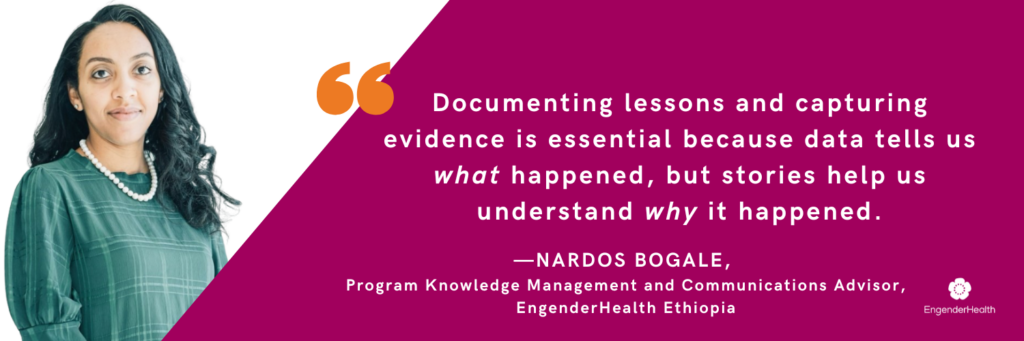
Documenting lessons and capturing evidence is essential because data tells us what happened, but stories help us understand why it happened. Strategic communications and storytelling can change perspectives and build empathy.
One experience from my time in a teaching hospital has stayed with me. A 14-year-old girl came seeking abortion care after an unintended pregnancy. Instead of receiving compassionate care, she was shamed by an elderly obstetrician for being sexually active and was denied the service.
A week later, she returned with a perforated uterus after undergoing an unsafe abortion in her community.
If we only recorded her as a complication case, we would miss the real lesson, that stigma and judgment within the health system can drive people away from safe, lifesaving care.
Behind every statistic is a person whose life is shaped by the attitudes of those around them. Storytelling helps us see that human reality. It challenges judgment, fosters compassion, and inspires health providers, policymakers, and communities to put dignity and evidence-based care at the center of sexual and reproductive health services.
Capturing these lessons throughout a program ensures we don’t repeat the same mistakes. Instead, we continuously learn, adapt, and improve; so that future reproductive health initiatives deliver not only quality services, but also compassionate, respectful care that people trust.
Sometimes, changing hearts is the first step toward changing health outcomes.
Much of your work centers on connecting evidence with the people behind it. Is there a story or experience that has had a lasting impact on you, or reaffirmed why this work matters?
One story that stayed with me is that of Loko Wako, a 17-year-old girl from a remote pastoralist community in Borena.
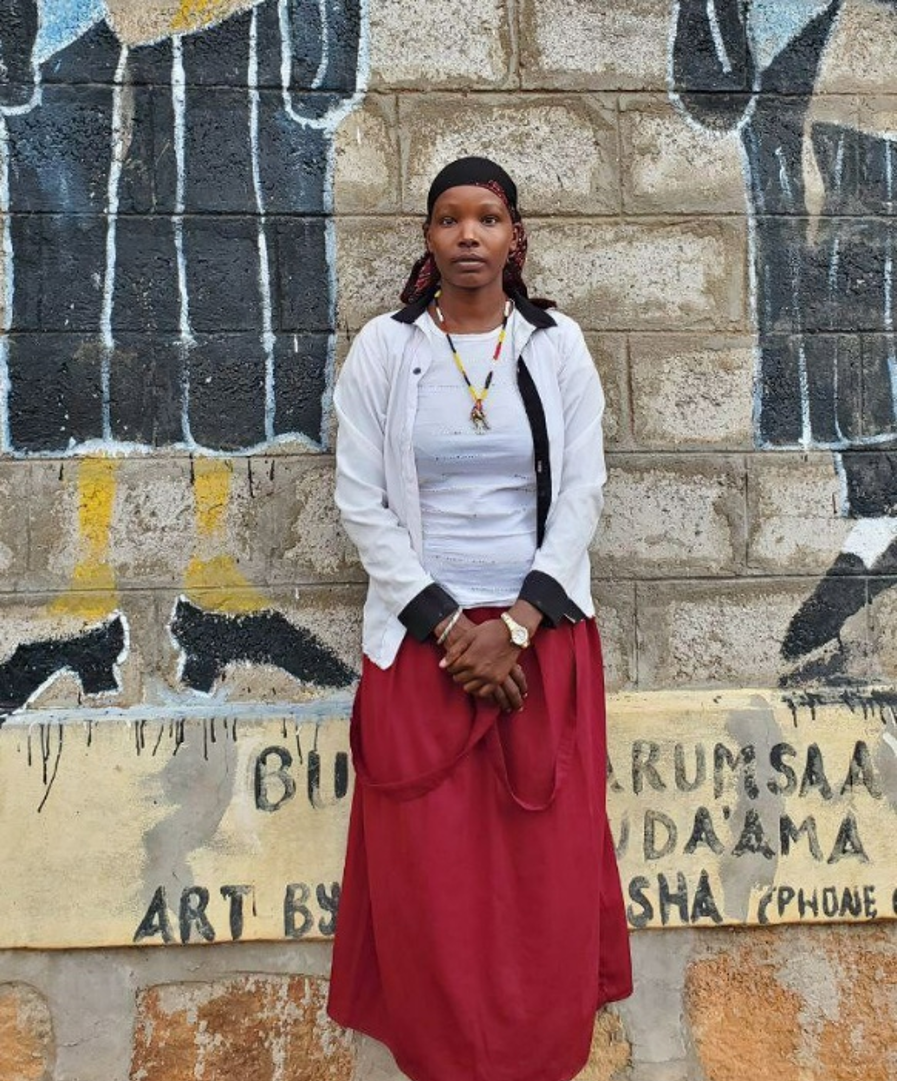
Loko Wako stands outside her school. Photo courtesy of EngenderHealth Ethiopia.
Loko dreamed of becoming a doctor. Despite walking long distances to school and excelling academically, her future was suddenly taken from her when, following her sister’s death, she was expected to marry her late sister’s husband under a long-standing cultural practice.
Afraid of losing her education and her dreams, she ran away.
Her classmates, who had participated in the project’s life skills education, refused to let her face this alone. They mobilized their school’s Gender Club, searched for her, used their own savings to bring her back, and stood with teachers, community elders, and local leaders to advocate for her future. Their persistence led to the cancellation of the forced marriage, and Loko returned to school still determined to become a doctor.
As I documented her story, I realized it wasn’t simply about one girl’s courage. It was about the power of investing in young people. The project didn’t just provide knowledge; it nurtured a generation of advocates who had the confidence to challenge harmful norms and protect one of their own.
Stories like Loko’s remind me that behind every indicator is a human life forever impacted.
Your work has reached many communities across Ethiopia. What are some lessons you’ve learned from partnering with communities? How do you ensure that programs are responsive to local cultures and needs?
One of the biggest lessons I’ve learned is that if we don’t truly listen to communities, people will find their own solutions; even when those solutions are unsafe.
The experience of the young girl mentioned above taught me that stigma, silence, and a lack of trust can be just as dangerous as gaps in the health system.
From a Knowledge Management and Communications perspective, that is why listening is so important. We must understand not only what services are available, but also why people may not feel safe accessing them. By documenting community experiences, creating spaces for honest dialogue, and feeding those lessons back into programs, we can design interventions that are responsive to local realities and reduce stigma.
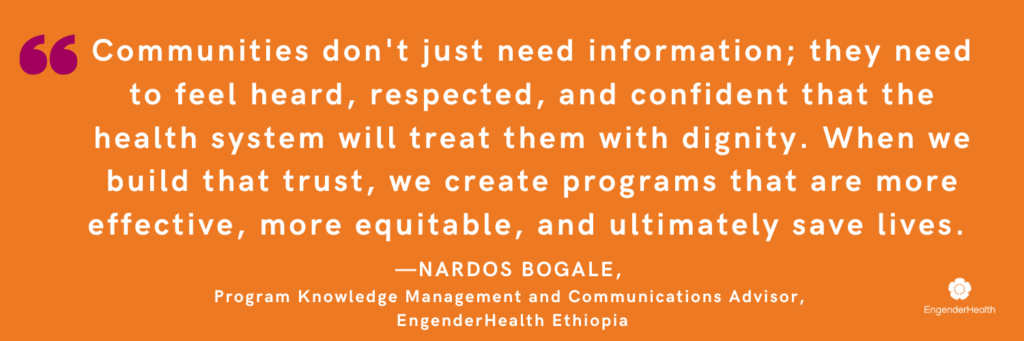
Communities don’t just need information; they need to feel heard, respected, and confident that the health system will treat them with dignity. When we build that trust, we create programs that are more effective, more equitable, and ultimately save lives.
What gives you hope that the future moves in the right direction for reproductive health in Ethiopia?
I’ve watched health providers, decision makers, and communities shift their attitudes after hearing the real experiences behind the data. The story of the young girl who suffered severe complications after being denied safe abortion care is heartbreaking, but it also reminds us why evidence, dialogue, and compassionate communication matter. These stories help us move conversations from judgment to understanding.
I’m also encouraged by Ethiopia’s growing investment in strengthening reproductive health services, using data for decision-making, and creating spaces where healthcare providers can learn, reflect, and improve the quality of care they provide.
For me, hope comes from knowing that every story shared, every lesson documented, and every conversation that challenges stigma has the potential to save lives.
Thank you to Lucy Fishkin for leading this conversation with such thoughtful questions and care.
Meet Nardos
Nardos Bogale, Program Knowledge Management and Communications Advisor
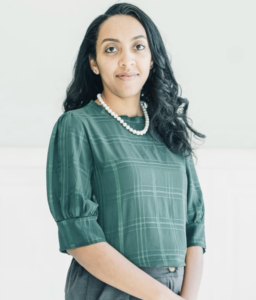
Nardos serves as the Knowledge Management and Communications Advisor at EngenderHealth Ethiopia, leading efforts to strengthen knowledge management, strategic communications, and organizational learning across health programs. She is passionate about ensuring that evidence, innovations, and program achievements are effectively captured, translated into knowledge products, and shared to inform decision-making, strengthen collaboration, and amplify impact. Nardos holds a Bachelor of Science in Midwifery, a Master of Public Health, and an MBA in Project Management from the University of Gondar.
Explore More on Abortion Rights and Care
Explore more perspectives, stories, and practical resources from EngenderHealth’s work to expand access to high-quality abortion care.
You may also be interested in:
- Meeting Opposition with Action: Practical strategies for responding to antichoice opposition and misinformation.
- Why the Global Abortion Care Movement Gives Traci L. Baird Hope: EngenderHealth’s President and CEO shares her thoughts on abortion care as a human right and why she remains hopeful about the global movement for reproductive rights.