
Increasing Access to Hormonal Intrauterine Devices in Kenya


Expanding hormonal IUD access across Kenya
EngenderHealth and our partners are working with Kenya’s Ministry of Health to bring hormonal IUD (HIUD) services closer to where people live, starting in seven counties: Homa Bay, Kakamega, Kiambu, Kirinyaga, Nakuru, Nyandarua, and Nyeri.
By expanding services in busy public facilities and strengthening referrals from the community, we’re helping more women in Kenya prevent unintended pregnancies and choose HIUDs when that’s the method that fits their lives.
To achieve this, we will focus on three linked outcomes:
- Expanding access to HIUDs to diversify the contraceptive method mix and increase treatment options for heavy menstrual bleeding
- Increasing demand and strengthening linkages that support voluntary, rights-based HIUD and contraceptive method uptake
- Building an enabling environment that institutionalizes HIUD services and heavy menstrual bleeding management within Kenya’s health system
Throughout, EngenderHealth and partners will provide tailored, data-driven technical assistance to the Ministry of Health, prioritizing high caseload public facilities where improved services can reach the most clients.
Strengthening services, demand, and policy for hormonal IUDs
We are building on existing Ministry of Health platforms and earlier investments, including EngenderHealth’s Hormonal IUD Scale-Up Catalytic Opportunity Fund in Kenya to roll out and scale up HIUD services in high-volume facilities.
Through provider training, mentorship, and supportive supervision, healthcare workers will be able to confidently offer quality HIUD services as one of the contraceptive options, and as a non-contraceptive treatment for heavy menstrual bleeding, to women and girls across Kenya. The project will also help the counties to address other service delivery gaps such as availability of essential basic equipment, instruments and supplies, and strengthening contraceptive logistics management and data management to offer quality family planning services at health facilities in project-supported counties.
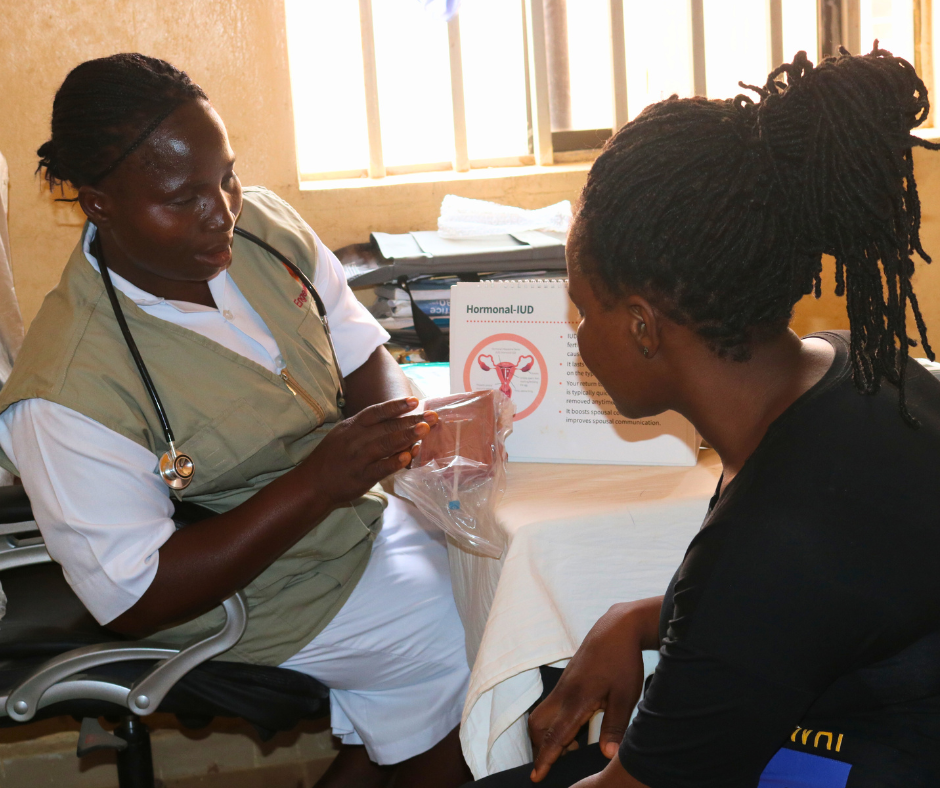
At the community level, this project will strengthen the capacity of Community Health Promoters, Community Health Assistants, Youth Peer Promoters and other community workers to inform people about HIUDs from trusted sources, ask questions, address misinformation and myths, and find nearby facilities that offer the full range of contraceptive options.
At the policy level, we are working with the government and partners so that HIUDs and care for heavy menstrual bleeding are built into Kenya’s family planning and menstrual health guidelines and provider training curricula, keeping these services available long after the project ends.
From 2025 to 2028, this work is expected to help around 1.1 million people in Kenya choose the contraceptive method that fits their lives, with an anticipated 23,000 supported by HIUD.
By helping the government meet its training goals in seven counties and reaching people with clear, practical information, EngenderHealth and our partners are helping make HIUDs a normal part of care in Kenya—available, understood, and here to stay.


