
Hormonal IUD Scale-Up Catalytic Opportunity Fund in Kenya


EngenderHealth is strengthening family planning services in Kenya by providing technical assistance to public health facilities across Embu, Laikipia, Makueni, and Nyamira counties. This program focuses on improving the delivery of hormonal IUD and subcutaneous Depo-Medroxyprogesterone Acetate (DMPA-SC) self-injection services, increasing access to modern, effective contraceptive options for women and girls.
Program Overview
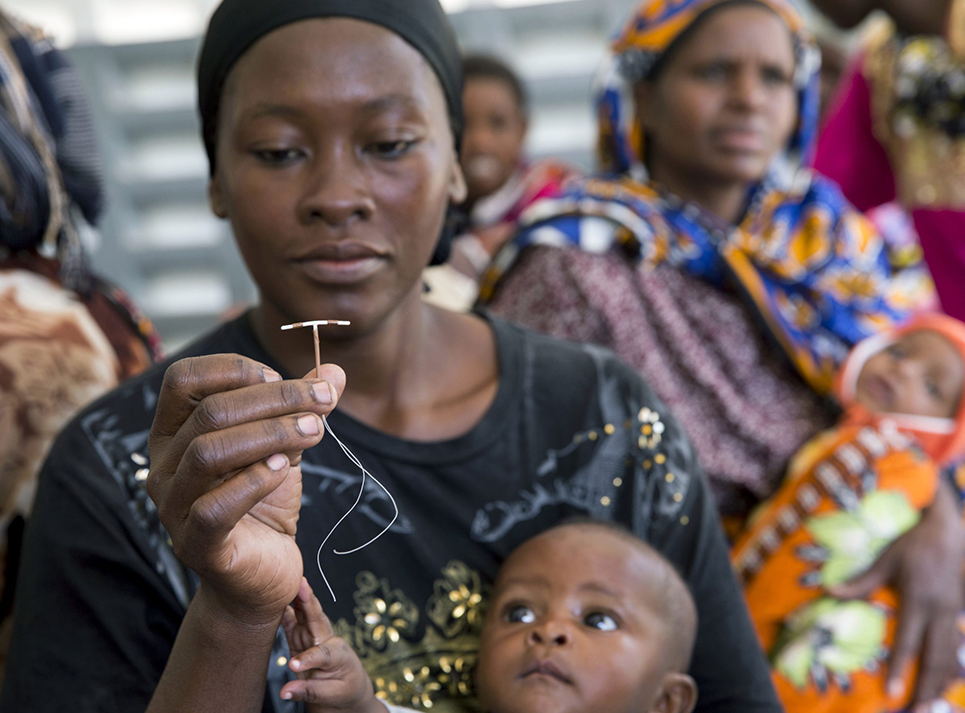
Funded by the Clinton Health Access Initiative’s Catalytic Opportunity Fund, this program strengthens the capacity of national- and county-level trainers to equip healthcare workers with the skills to deliver high-quality hormonal IUD and DMPA-SC services. By enhancing both provider training and facility readiness, the initiative supports the expansion of method choice, improves service quality, and advances equitable access to contraception across Kenya’s public health system.
Addressing Unmet Need for Family Planning in Kenya
According to FP2030, as of 2022:
- The modern contraceptive prevalence rate for all women in Kenya was 45.4%
- Only 3.1% of women were using an IUD
- The unmet need for contraception among all women was 14%
EngenderHealth is working to close this gap by strengthening Kenya’s health systems and ensuring equitable access to a full range of contraceptive options, including the hormonal IUD—a highly effective, safe, long-acting reversible contraceptive method.
Key Program Activities
In partnership with local partner KMET, the current phase of the program includes:
- Building County-Level Training Capacity: Training and mentoring 5 national and 24 county trainers to plan and facilitate HIUD and DMPA-SC trainings for 534 healthcare providers from 172 public health facilities in four counties.
- Improving Facility Readiness: Supporting public facilities to integrate hormonal IUDs and DMPA-SC into routine service offerings, ensuring providers are equipped to deliver client-centered, rights-based care.
- Generating Community Awareness and Demand: KMET will lead community engagement through:
- Training and mobilizing Community Health Promoters and Assistants (CHP/As)
- Men as Partners engagement sessions to promote shared decision-making
- Distribution of family planning information materials
- Hosting local radio talk shows to increase awareness of contraceptive options
Promoting Inclusive and Gender-Responsive Services
Ensuring the safeguarding of individuals and their rights to full, free, and informed choice, this new phase will focus on ensuring responsive and inclusive services by incorporating a revised provider training module to sensitize these providers on gender, youth, and social inclusion and at the community-level to support male engagement in contraceptive counseling.
Sustainable Impact
By standardizing service delivery and building local capacity, the program ensures long-term improvements in access to hormonal IUDs and DMPA-SC in Kenya. Trainers will continue to mentor providers beyond the program’s timeline, while community awareness efforts will help sustain demand for voluntary, high-quality family planning services.
Access to safe, effective, and affordable contraception is a key step toward a gender-equal world where everyone can fully realize their sexual and reproductive health and rights. EngenderHealth is committed to expanding access to these vital services, advancing reproductive rights, and driving lasting change for a more equitable future in Kenya.


