
Fatuma’s Story: Family Planning Integration helps reach more women in Ethiopia
By Firewein Yilma Gezahegn, Mohammed Ahmed Mohammed, Wondimu Chirfa Tolera, Gizachew Balew Jembere, Kate O’Connell, Danielle Garfinkel
The Reach, Expand, and Access Community Health (REACH) program in Ethiopia’s Jimma and Borena zones aims to ensure access to information and services for integrated sexual and reproductive health and rights, menstrual hygiene management, and water, sanitation, and hygiene (WaSH) services for women and young people.
Through our program initiatives, we are addressing barriers to services faced by women and young people in underserved areas and fostering an environment where they can access high-quality care.
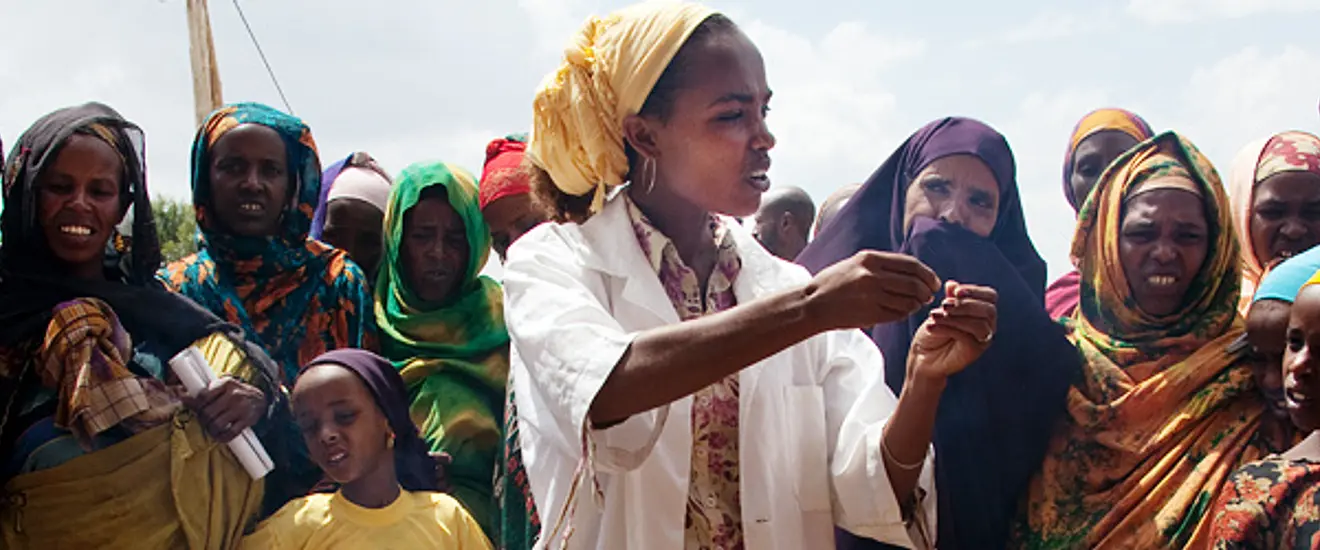
Fatuma is a 30-year-old mother of five children living in the rural pastoralist village of Dichoto Kebele in Ethiopia’s Afar Region. She supports her family by collecting and selling wooden charcoal.
Fatuma didn’t know about family planning methods and didn’t space her pregnancies. She faced many difficulties raising her children. Two of her children were admitted for malnutrition treatment at the nearby Dichoto Health Center. While she was there with her children, a health provider counseled Fatuma about family planning and its benefits.
When she got home, Fatuma consulted her husband about different contraceptive methods. Fatuma and her husband chose for her to use the three-year implant method.
Tesfaye, a healthcare provider at Dichoto Health Center, said:
“Fatuma came to me after hearing about different family planning methods from the nutrition unit. She asked me to give her additional information about different methods, I counseled her about all methods, and she decided to take an Implant.
EngenderHealth does a lot of work in family planning and abortion services in the Afar Region, including providing competency-based training for service providers that increased service uptake. Currently, family planning counseling is being given to all clients in the waiting area and across all the departments in Dichoto Health Center. This has helped us strengthen internal referrals and provide services for clients like Fatuma.”
Fatuma’s last child is four years old, and after four years with her implant, Fatuma is very happy.
“I am excited about my situation because my children’s health is improved, and I have avoided unplanned pregnancy. If I want to have children, I know that I can remove the implant and get pregnant. I have been telling local mothers about my experience and linking them to the health center myself so that they can benefit from family planning services and live happy lives,” says Fatuma.
In addition to Fatuma, facility reports show that more than 196 women were informed about FP through an internal integration approach across different service units and adopted contraceptive methods of their choice. This approach is practical and advantageous to pastoralist women who rarely visit health facilities. It provides one stop for information and access to services or referrals to all available services.
Commitment to Sexual and Reproductive Health and Rights is Crucial for a Better Future for All
Fatuma’s story show us that while the ongoing conflict, drought, and humanitarian crisis in Ethiopia disproportionately affects women and girls, strategic and ongoing support for sexual and reproductive health and rights, including maternal, newborn and child health, can be a beacon of hope for community members.
EngenderHealth’s contributions have led to life-changing, positive outcomes not only for individual women and girls but also for their families, communities, and the nation at large. As Ethiopia continues to navigate its complex challenges, sustained commitment to sexual and reproductive health and rights efforts is crucial for fostering resilience and building a healthier, more equitable future for all Ethiopians.
Read other inspiring stories from Ethiopia from our blog “Overcoming Barriers to SRHR in Ethiopia.”