
Faith, Integration, and Precision: Women at the Center of Change in Ethiopia


By Amina Kampise, Merian Abdirkadir, Chaltu Ahmed, Betel Sahile and Yanet Ayenachew, EngenderHealth Ethiopia
At Mieso Health Center in Ethiopia, the call to prayer echoes across a pastoralist town where faith shapes daily life, family decisions, and health-seeking behaviors. For many women, questions about pregnancy spacing and childbirth are not only medical, but also spiritual, cultural, and deeply personal.
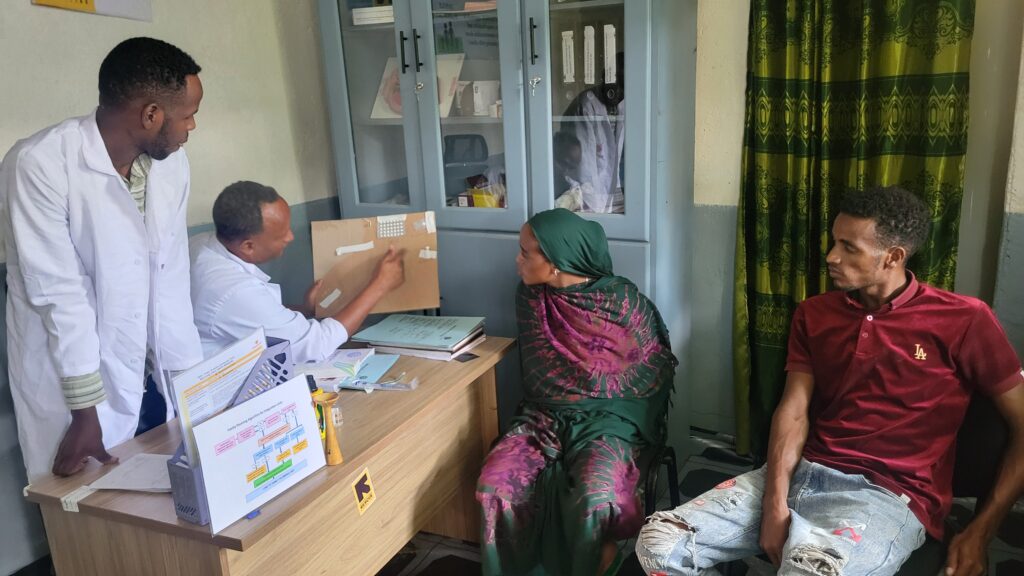
For years, women arriving at the health center encountered services that felt fragmented. Antenatal care, delivery, and immunization services happened in separate spaces, with little continuity or connection. Providers noticed the gaps too.
Bridging Gaps in Care
“Each service operated in isolation, and clients rarely received comprehensive care,” recalls Health Center Director Kedir Hassan.
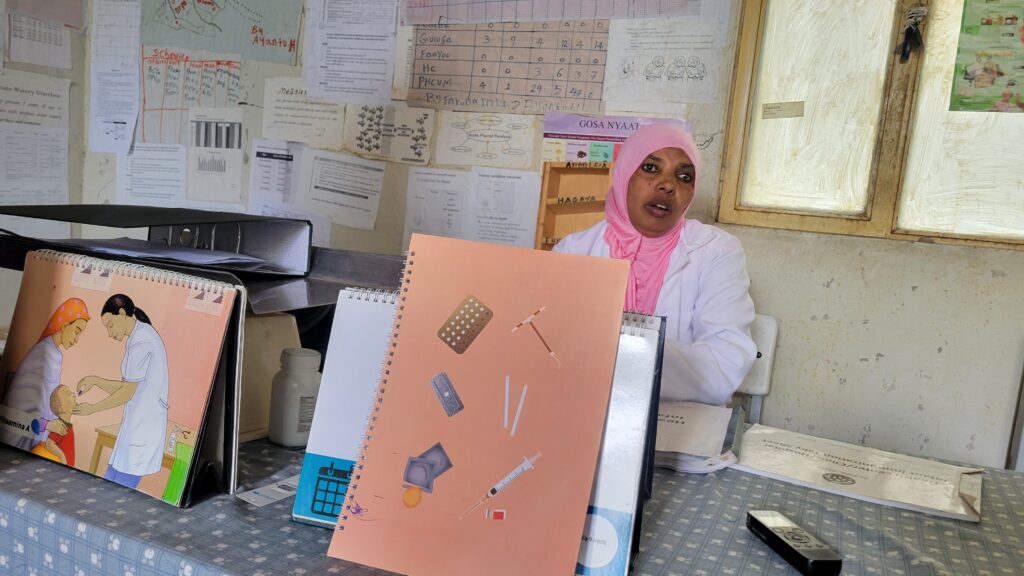
At the same time, misconceptions weighed heavily. Many women believed family planning conflicted with Islamic teachings. “Most women told us they couldn’t use family planning because they are Muslim,” says midwife Ayantu Hussen. The result was low uptake—sometimes as few as six acceptances per month.
In the labor ward, another challenge persisted. Blood loss after childbirth was assessed visually, often delaying recognition of postpartum hemorrhage (PPH).
“Sometimes by the time we realized a mother was in danger, it was almost too late,” explains Health Officer Anas Abduhaman.
Listening Through Faith
With support from EngenderHealth’s RMNCH+PPFP project, Mieso Health Center began a transformation rooted in integration, mentorship, and faith-sensitive care.
One of the most powerful shifts happened in these conversations.
Ayantu, who works in the immunization unit, began reframing family planning discussions in ways that resonated deeply with women.
“I remind my clients that the Qur’an teaches mothers to breastfeed their children for two full years—that is the child’s right,” she explains. “That means a mother needs time to recover and care for her child before becoming pregnant again.”
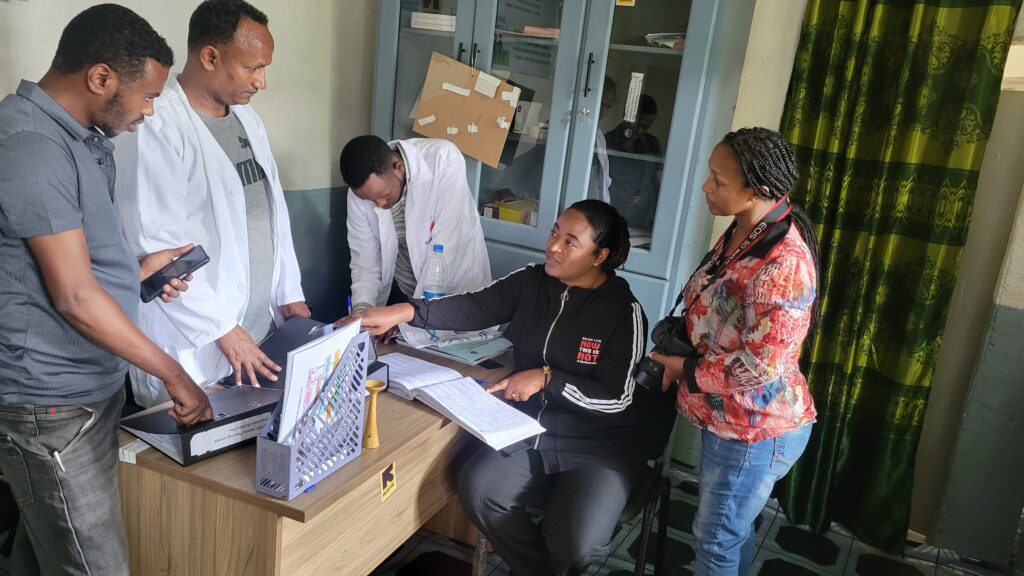
For many women, this perspective changed everything. Family planning counseling is now woven across antenatal care, labor and delivery, postnatal care, maternal and child health, and immunization services. A woman bringing her child for vaccination may leave with information—or even a same-day method—if she chooses.
“Faith and health no longer feel like opposites,” Ayantu reflects. “They work hand in hand to build stronger families and healthier mothers.”
Accuracy in Every Birth
Change also came to the delivery room.
Through training and mentorship, providers adopted the E-MOTIVE bundle of care and began using calibrated drapes to accurately measure blood loss after birth. Moving from visual estimation to objective measurement strengthened confidence and sped responses.
“Now we don’t guess,” says Anas. “We know. And we act early.”
Connecting Care Across Services
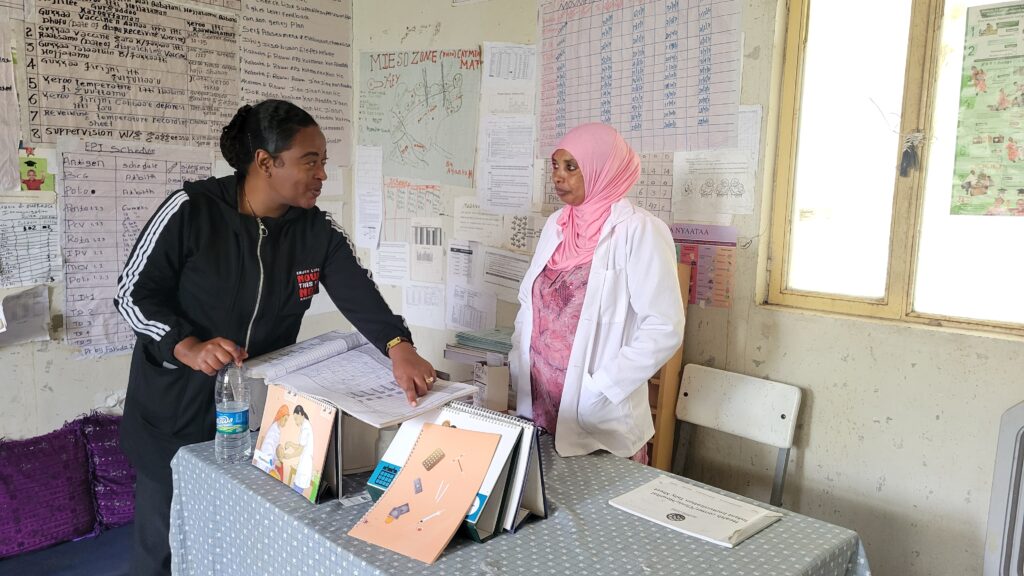
Today, departments within the health center are linked through a structured referral system and designated focal persons who track clients across services. Documentation has improved. Intrauterine contraceptive device (IUCD) kits and supplies are consistently available. Providers counsel women at every point of contact.
Group discussions with women accompanying laboring mothers have turned waiting spaces into learning spaces. More men are participating in counseling sessions, signaling growing acceptance within families.
“Now, our internal referral linkage works efficiently—every department is involved,” says Tesfa Dejen.
Women in Mieso are no longer passive recipients of care: they are informed participants in decisions about their bodies, their families, and their futures.