
Chichale’s Story: Happy with Her Family Planning Method in Ethiopia
By Olifan Degabas Olkeba, Amina Kanpise Arero, Wondimu Chirfa Tolera, Gizachew Balew Jembere, Kate O’Connell, Danielle Garfinkel
The Reach, Expand, and Access Community Health (REACH) program in Ethiopia’s Jimma and Borena zones aims to ensure access to information and services for integrated sexual and reproductive health and rights, menstrual hygiene management, and water, sanitation, and hygiene (WaSH) services for women and young people.
Through program initiatives, we are addressing barriers to services faced by women and young people in underserved areas and fostering an environment where they can access high-quality care.
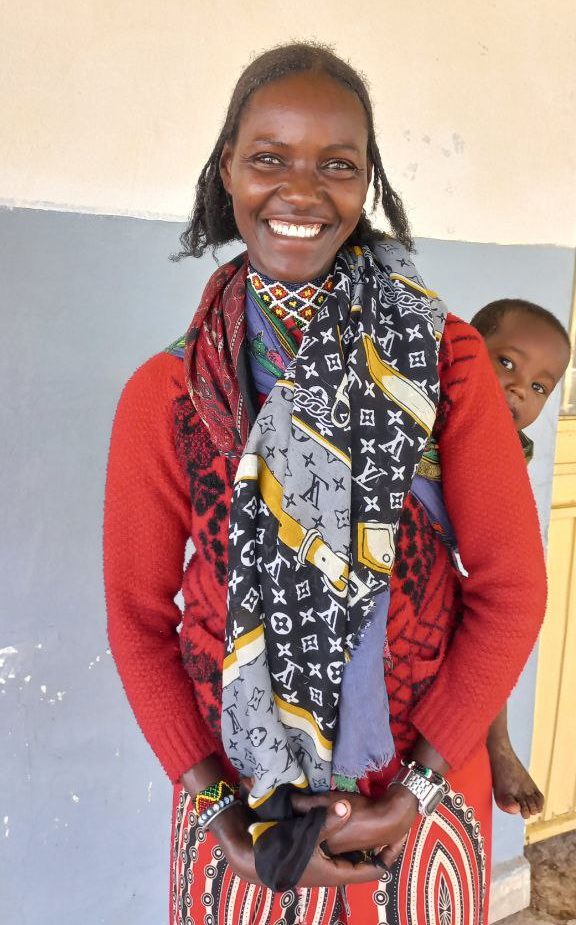
Chichale, a 30-year-old mother of five children, living in Har-Wayu Kebele, a rural pastoral village in Borena Zone. She is a satisfied client with an IUCD. Photo by Olifan, EngenderHealth Staff.
Chichale is a 30-year-old mother of five children. She is a pastoralist living at Har-Wayu Kebele, a rural village in Borena Zone where access to transportation is challenging because of the hilly topography and rocky road of the kebele.
Due to the prolonged drought, her livelihood deteriorated, and she faced difficulty in feeding her family and sending her children to school.
She decided to limit her family size and consulted a nearby health facility, where they discussed available family planning (FP) methods. She wanted an intrauterine contraceptive device (IUCD), but none were available.
Since the nearby health facility had no trained service provider and lacked her method of choice, Chichale was worried about becoming pregnant.
Shortly after Chichale’s experience, the REACH project trained the health facility providers on comprehensive contraception methods and also distributed equipment, commodities, and other supplies. Additionally, the project conducted social behavioral change communication training for health extension workers and started demand-creation activities, including community dialogue, and home-to-home visits at the village level which improved referral linkage between the health post and the health center.
After these capacity-building interventions, the trained Health Extension Workers were able to provide Chichale with IUCD services. When we met her 11 months later, she was excited and leading a healthy and happy life. As a satisfied client, she has been sharing her experience with nearby mothers. As a result of her peer counseling, 19 clients in Chichale’s area adopted an IUCD as the family planning method of their choice.
“I was trying to space my children by using different contraceptive methods like three-months injectable, Implanon, and oral pills, but none of them suited my needs, as I live in a kebele where transport service and access to the road is challenging.
Through community dialogue, health extension workers told us the availability of IUCD service at Har-Wayu health center and linked me by referral paper to consult providers in the health center. The health care providers in the facility welcomed and provided me with appropriate information about the methods, its follow-up, and to come back to the health center if there is any problem with it.
I decided on an IUCD and have been using it for nearly a year. I am healthy and very happy with it. I keep on telling my neighbors about the method and I think many of them took it,” said Chichale.
Commitment to Sexual and Reproductive Health and Rights is Crucial for a Better Future for All
Chicale’s story show us that while the ongoing conflict, drought, and humanitarian crisis in Ethiopia disproportionately affects women and girls, strategic and ongoing support for sexual and reproductive health and rights, including maternal, newborn and child health, can be a beacon of hope for community members.
EngenderHealth’s contributions have led to life-changing, positive outcomes not only for individual women and girls but also for their families, communities, and the nation at large. As Ethiopia continues to navigate its complex challenges, sustained commitment to sexual and reproductive health and rights efforts is crucial for fostering resilience and building a healthier, more equitable future for all Ethiopians.
Read other inspiring stories from Ethiopia from our blog “Overcoming Barriers to SRHR in Ethiopia.”