
Restoring Essential Health Services in Ethiopia


New support secured through the Project Resource Optimization Initiative will help restore reproductive, maternal, newborn, and child health services for pastoralist communities in Ethiopia’s Afar and Somali regions.
In Ethiopia’s Afar and Somali regions, distance, mobility, and gaps in health services can make essential care difficult to reach. The loss of U.S. foreign assistance in 2025 put additional pressure on services that pregnant women, newborns, young children, and families rely on.
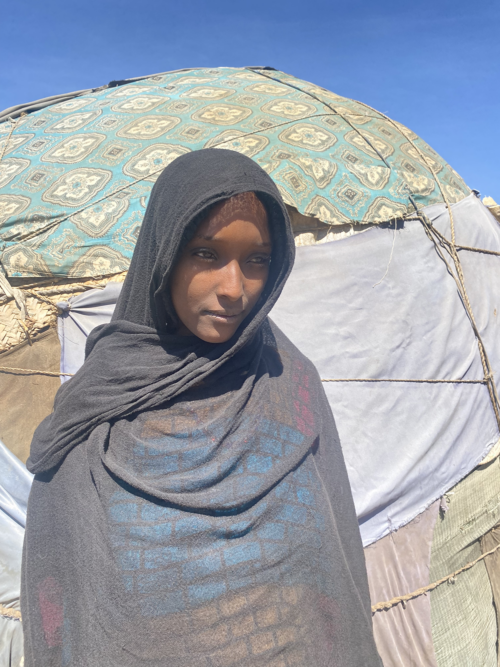
Ergo Humed stands outside her home in Ethiopia. She is one of the people whose lives were touched by the Ethiopia Lowlands Health Activity, work that EngenderHealth is now helping restore in Afar and Somali. Photo courtesy of EngenderHealth Ethiopia.
EngenderHealth Ethiopia is now helping restore essential reproductive, maternal, newborn, and child health and nutrition services through public health facilities and mobile health and nutrition teams, while strengthening the local systems communities rely on for continued care.
The two-year project was made possible through the Project Resource Optimization (PRO) Initiative, which was created in the wake of the dismantling of USAID to identify effective health and development programs at risk of shutting down and connect them with donors able to step in.
EngenderHealth’s work in Afar and Somali was included in PRO’s Urgent and Vetted database, helping secure new philanthropic support. Since its launch in 2025, PRO has helped mobilize more than $150 million to sustain global health and humanitarian programs affected by reductions in foreign assistance.
For EngenderHealth Ethiopia, that support means essential services can return to communities previously reached through the USAID-funded Ethiopia Lowlands Health Activity, which was terminated early in 2025.
The services being restored have a human story behind them. Read about three people whose lives were changed through the Ethiopia Lowlands Health Activity before the project was cut short in 2025.
The new project will support services across 166 public health facilities and eight mobile health and nutrition teams in 16 districts of Afar and Somali. More than 558,000 people are expected to benefit, including pregnant women, newborns, young children, and women seeking contraceptive care.
This project will revitalize service delivery across 146 public health facilities and 8 mobile health and nutrition teams, institutionalizing high-impact interventions such as postpartum hemorrhage prevention and management, kangaroo mother care, immunization catch-up, and postpartum family planning. The project will also strengthen clinical mentorship, health worker capacity, supply systems, and government-led coordination to help sustain access to quality care.
“This project is about protecting lives and preventing the loss of hard-won progress in maternal, newborn, and child health. For pastoralist communities in Afar and Somali, maintaining access to essential health services is critical to protecting the health and wellbeing of mothers, newborns, and children.
This funding allows us to restore, sustain, and protect gains in making lifesaving services available, reach communities that are difficult to serve, and strengthen local systems so that progress can be sustained.”
— Meskerem Demisse, Project Director
The project represents an opportunity not simply to restart activities, but to protect progress that communities, health workers, and local health systems have built over several years. By restoring care through both health facilities and mobile teams, EngenderHealth and its partners can once again reach pastoralist communities while strengthening the systems needed to keep essential services available over time.
This project in Ethiopia is the second EngenderHealth program included in PRO’s Urgent and Vetted database to secure new support following the loss of USAID funding. In India, new support is also allowing EngenderHealth and Ariadne Labs to continue testing and refining a Cesarean Safety Checklist designed to make cesarean delivery safer.
For communities in Afar and Somali, this new chapter means essential care can begin reaching people again, while hard-won gains in maternal, newborn, and child health have a chance to continue.