
Strengthening Data Collection and Management Systems on DMPA-SC Self-Injection in the Democratic Republic of the Congo


EngenderHealth is strengthening family planning services in the Democratic Republic of the Congo (DRC) by providing technical assistance to public health facilities across two health zones and 50 health facilities in Kwango province. In partnership with the International Youth Alliance for Family Planning RDC (IYAFP-RDC) and the Ministry of Health, this program focuses on improving how self-injectable DMPA-SC services are recorded in the national health information system and on building community awareness of self-injection—expanding access to a discreet, convenient contraceptive option for women and girls in remote communities.
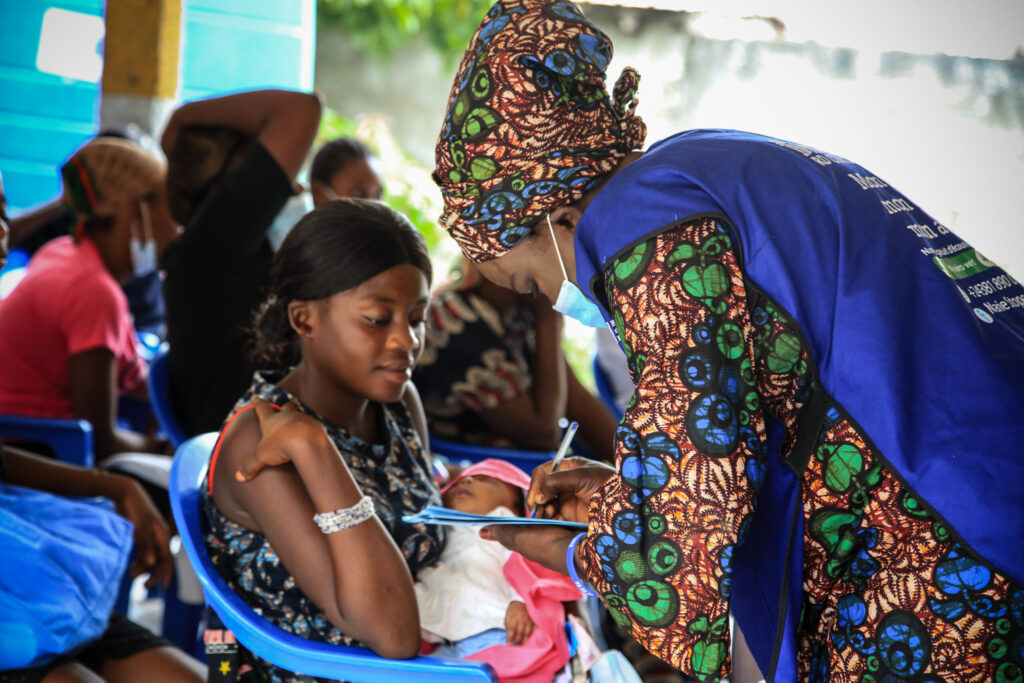
Program Overview
Funded by the Clinton Health Access Initiative’s Catalytic Opportunity Fund, this program supports the Ministry of Health’s plan to scale up DMPA-SC self-injection (SI) by closing a critical information gap. DMPA-SC is an injectable contraceptive supplied in an all-in-one Uniject device that can be self-administered, allowing women to manage their own contraception without repeated facility visits—a significant advantage in a province where long distances often separate communities from health facilities. By strengthening data systems, building provider capacity, and generating community demand, the program advances equitable access to self-care contraceptive options across Kwango’s public health system.
Addressing Unmet Need for Family Planning in the DRC
Despite growing demand for DMPA-SC in the Democratic Republic of the Congo, uptake of self-injection remains very low, and remote communities face long distances to the nearest health facility.
According to the 2023–2024 Demographic and Health Survey:
- 36% of injectable contraceptive users in the DRC choose DMPA-SC
- Among every 100 clients using DMPA-SC, only one self-injects—the remaining 99 rely on provider-administered injections
- In Kwango province, only 2 of 14 health zones currently capture self-injection data through the national health information system
EngenderHealth is working to close this gap by strengthening the DRC’s health systems and ensuring equitable access to a full range of contraceptive options, including DMPA-SC self-injection—a safe, effective, and convenient method that supports women’s autonomy and informed choice.
Key Program Activities
In partnership with IYAFP-RDC and under the leadership of the National Reproductive Health Program (PNSR), the program includes:
- Strengthening Coordination for Ministry-Led Scale-Up: Convening the Ministry of Health, provincial reproductive health coordinators, health zone representatives, and partner organizations to jointly select target health zones and facilities, align efforts with government priorities, and sustain coordination through quarterly meetings.
- Expanding Data Systems and Provider Capacity: Orienting up to 160 healthcare providers and health zone managers across 50 public health facilities on the complementary reproductive health module and revised data collection tools, so self-injection can be accurately distinguished and recorded in the national DHIS2 platform.
- Improving Data Visibility: Distributing revised family planning registers, records, and reporting templates, and supporting joint supportive supervision visits led by the PNSR to monitor data quality and reporting.
- Generating Community Awareness and Demand: Working with IYAFP-RDC to produce educational materials and lead community awareness and distribution campaigns. This may include:
- Producing and distributing job aids, posters, and flyers on DMPA-SC self-injection
- Hosting awareness and distribution mini-campaigns in community gathering places such as marketplaces and churches
- Engaging trained community health workers and peer educators to promote informed choice
Promoting Inclusive and Gender-Responsive Services
Ensuring individuals’ rights to full, free, and informed choice, the program strengthens the quality of counseling, so DMPA-SC self-injection is presented clearly as one option within a full range of contraceptive methods. Community awareness efforts led by IYAFP-RDC, a youth-led organization, work to dispel myths and misconceptions and elevate the value of self-injection for women and adolescent girls—particularly those in underserved, hard-to-reach communities.
Sustainable Impact
By strengthening the national health information system rather than building a parallel one, and by relying on Ministry of Health trainers, mentors, and supervisors, the program ensures that improvements in self-injection data and service delivery last beyond the grant period. Trained providers serve as mentors to their peers; revised data tools are advocated for inclusion in all family planning training; and reliable uptake data provide the Ministry with the evidence it needs to direct resources and advocate for sustained investment. EngenderHealth is committed to expanding access to these vital services, advancing reproductive rights, and driving lasting change for a more equitable future in the DRC.
Program Partners
- Ministry of Health – National Reproductive Health Program (Programme National de Santé de la Reproduction, PNSR)-National Health Information System Division (Division du Système National de l’Information Sanitaire, DSNIS)
- International Youth Alliance for Family Planning RDC (IYAFP-RDC)


