


resource
Our Programs
Hormonal IUD Roll Out and Scale Up in Nigeria
Nigeria
| 2023–2026
With support from the Clinton Health Access Initiative, this program aims to increase access to and provision of hormonal intrauterine device services in public health facilities in Nigeria.


Expanding Access to Hormonal IUD Services in Nigeria
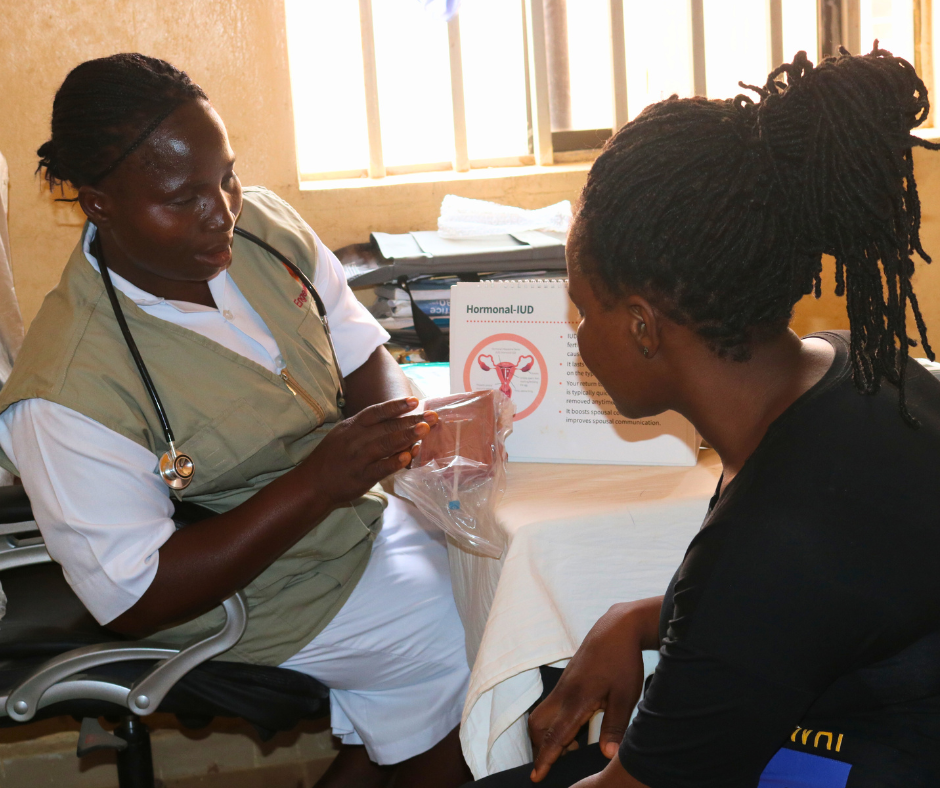
Through the Hormonal Intrauterine Device (HIUD) Roll Out and Scale Up program, EngenderHealth provides technical assistance to Nigerian public health facilities across Bauchi and Sokoto states to improve their ability to offer high-quality HIUD services. Funded by the Clinton Health Access Initiative’s Catalytic Opportunity Fund, this program strengthens the capacity of national- and regional-level trainers to provide instruction to healthcare workers on HIUD service provision, and it enhances the readiness of public health facilities to offer those services.
In Nigeria, access to modern contraceptive care remains uneven. While many women want to prevent or delay pregnancy, far fewer can choose long-acting family planning (FP) options like HIUDs, and unmet need for modern contraception remains high.
EngenderHealth is working with local and national partners to strengthen health systems and expand access to contraceptive choices to all clients in Nigeria. Facilitating access to highly effective contraception methods like HIUDs is vital to our mission, helping ensure people can make informed, voluntary decisions about their reproductive health.
When women have access to safe, effective, and affordable contraceptive care, we move closer to a gender-equal world where all people achieve their sexual and reproductive health and rights.
Training Healthcare Providers to Deliver High-Quality Hormonal IUD Services

This project has already trained 852 healthcare workers across the Bauchi, Sokoto, Kebbi, Plateau, Ebonyi, and Kogi states in HIUD insertion, management, and removal. As a result, 140 supported secondary and High Volume Primary healthcare facilities now have trained health workers on staff, alongside trained nurses and midwives in a growing share of primary healthcare facilities.
EngenderHealth has reinforced this capacity through follow-up coaching and the distribution of printed job aid materials, helping ensure the success and sustainability of the services.
Driving Demand for Voluntary Contraceptive Care
The project has also supported demand-generation activities, such as printing information, education, and communication materials and banners for display in supported clinics. We also leverage existing media platforms on Reproductive Health and Family Planning on radio and TV to conduct social marketing on HIUDs and integrate messaging with various community engagement activities.
Securing Government Investment in Family Planning
In parallel, EngenderHealth has advanced advocacy efforts to strengthen government financing for contraceptive care. This work has supported the inclusion of HIUD budget line items in both Bauchi and Sokoto states and contributed to a 40% increase in Bauchi State’s 2025 family planning budget.
Bauchi State
In Bauchi, ₦50M was released to UNFPA as counterpart funding for FP, from its ₦120M approved 2024 budget for Family Planning (commodities have since been procured and delivered to the state). This was in contrast to ₦70M budgetary allocation in 2023, with zero releases. The state had also gone further to approve the release of another ₦70M from its 2025 FP budget as a contribution towards the national purse for procurement of FP Commodities.
Sokoto State
In Sokoto, the State Primary Health Care Development Agency (SPHCDA) secured release of the full ₦30M FP budget from its 2024 FP budget, which was reviewed from ₦10M in 2023 through our advocacies and engagements with the stakeholders. Like Bauchi, Sokoto State also committed ₦30M, as approved and released from its 2024 budget, to the FMOH through the UNFPA channel for the procurement of FP commodities that had also been delivered to the state.
Kebbi and Plateau States
For Kebbi and Plateau, 2025 FP budgets were approved: ₦300M and ₦23M, respectively, in contrast to ₦200M and ₦23M, respectively, budgeted in the previous year with no releases.
In Kebbi, a memo has been submitted to the Governor requesting ₦199,999,93 for FP consumables and commodities, later reduced to ₦90M for approval from the 2025 budget, which is still running.
While in Plateau state, ₦10M was released to the Drug Management Agency for FP commodity procurement, with another supplementary budget of ₦130M raised for FP in 2025, as the consistent previous ₦23M allocation was declared insufficient in addressing the state’s yearly FP needs.
Ebonyi and Kogi States
Through advocacy strides, Kogi State is stepping up investment in Family Planning, scaling its budget line from ₦51.9M in 2025 to ₦129M in the 2026 budget, a bold move toward strengthening access and sustainability of services.
Ebonyi State has made a significant financing shift, increasing its Family Planning budget by 300% (₦20M) in 2026’s budget compared to the ₦5 million allocation in the 2025 budget, reflecting growing political will and commitment.
Building Sustainable Access to Hormonal IUD Services
Through sustained partnership and locally led capacity building, EngenderHealth is strengthening Nigeria’s health system to ensure hormonal IUD services are available, accessible, and delivered with quality and choice at the center.
This work reflects a long-term commitment to expanding contraceptive options and supporting people to make informed decisions about their reproductive health today and in the future. As provider capacity grows and government investment increases, more people across Nigeria will have access to reliable, voluntary contraceptive care.
Program Partners
- Federal Ministry of Health and Social Welfare
- National Primary Health Care Development Agency
- State Ministries of Health
- State Primary Health Development Agencies
- State Hospital Management Boards
CORE IMPACT AREAS AND STRATEGIC APPROACHES
Learn More About the Work We DoRelated Resources
Resources

Resources

Resources
Resources

Resources
Resources