
Advocacy Solutions to Improve Primary Health Care (PHC) Delivery and Health Outcomes in Nigeria


EngenderHealth’s Advocacy Solutions to Improve Primary Health Care (PHC) Delivery and Health Outcomes in Nigeria program strengthens primary health care services by driving demand, enhancing quality, and improving health outcomes through strategic advocacy in partnership with government and civil society.
The program is funded by the Gates Foundation and implemented in Kano, Kaduna, and Lagos states in a consortium partnership with the Centre for Communication and Social Impact (CCSI), the International Society of Media in Public Health (ISMPH), and Legislative Initiative for Sustainable Development (LISDEL).
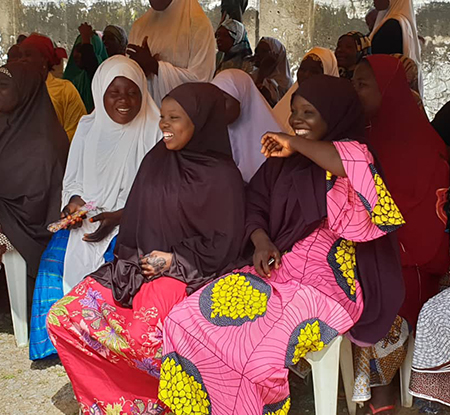
Nigeria has the second-highest rate of maternal, newborn, and child deaths globally (World Health Organization), a crisis worsened by economic instability and extreme poverty, with approximately 88 million Nigerians—40% of the population—living in extreme poverty. A strong, well-resourced primary health care system is essential, yet inadequate infrastructure, supply shortages, and a healthcare workforce crisis threaten progress.
To build a stronger policy and financing environment that upholds health commitments, this program implements five complementary approaches:
- Building Champions: We engage policymakers and community leaders to prioritize improved health access, fostering strong advocates for change.
- Strengthening Accountability: We reinforce health coalitions and accountability mechanisms at both state and national levels to ensure sustained progress.
- Enhancing Health Planning & Budgeting: We improve health planning, budgeting, and spending for more effective and equitable service delivery at the state level.
- Leveraging Media & Communications: We engage faith-based and community leaders through strategic media and communications, increasing awareness and access to health services.
- Using Data for Advocacy & Decision-Making: We promote the use of evidence-based, sex-disaggregated data to drive informed advocacy and policy decisions.
By integrating these approaches, we are expanding access to high-quality, gender-responsive primary health care services, improving the health and well-being of Nigerian communities.
By 2028, we aim to achieve four key outcomes:
- Government Commitment: The governments of Kano, Kaduna, Lagos, and other supported states prioritize and champion reproductive, maternal, newborn, child, and adolescent health (RMNCAH) and primary health care in their political agendas.
- Gender-Sensitive Policies: State governments develop, adopt, and implement policies that are gender-sensitive and strengthen access to quality healthcare.
- Sustainable Funding: Governments allocate dedicated budgets to ensure the effective implementation of gender-sensitive health and primary health care policies and programs.
- Stronger Accountability: Governments and citizens in Kano, Kaduna, and Lagos actively implement and support improved accountability mechanisms to uphold primary health care and RMNCAH commitments.
Through these efforts, we will drive systemic change to create sustainable, gender-responsive health systems that improve lives across Nigeria.
Program Consortium Partners
- Centre for Communication and Social Impact (CCSI)
- International Society of Media in Public Health (ISMPH)
- Legislative Initiative for Sustainable Development (LISDEL)


