
When Every Minute Matters: How E-MOTIVE Care Saved Demekech’s Life After Childbirth in Ethiopia


By Tesfaye Ordolo and Meseret Mengesha, EngenderHealth Ethiopia
Postpartum hemorrhage (PPH), or excessive bleeding after childbirth, remains one of the leading causes of maternal death worldwide. At Leku General Hospital in Sidama, Ethiopia, calibrated obstetric drapes and the E-MOTIVE package of care are helping healthcare providers identify dangerous bleeding earlier and respond immediately. Demekech Debero’s story shows how timely detection, teamwork, and compassionate care can save a mother’s life.
A High-Risk Pregnancy and a Devastating Loss
Demekech Debero, a 24-year-old first-time mother, was referred from Telamo Health Center to Leku General Hospital for management of severe preeclampsia. When she arrived, healthcare providers determined that her baby had died before birth.
Alongside this devastating loss, Demekech was experiencing serious medical complications, including a critically low platelet count of 59, placing her at exceptionally high risk of postpartum hemorrhage.
The maternity team at Leku General Hospital recognized both the clinical risks she faced and the emotional weight of what she was experiencing. They prepared for a possible emergency, monitored her closely, and supported her through the loss of her baby.
“I am alive today because of the care I received at Leku General Hospital. When the bleeding started, I was overwhelmed with fear and grief after losing my baby. The situation felt hopeless.”
— Demekech Debero
The Critical Role of Early Detection
One of the biggest challenges in preventing maternal deaths from postpartum hemorrhage is recognizing excessive bleeding before it becomes severe. Traditionally, visual estimation can underestimate blood loss and delay lifesaving treatment.
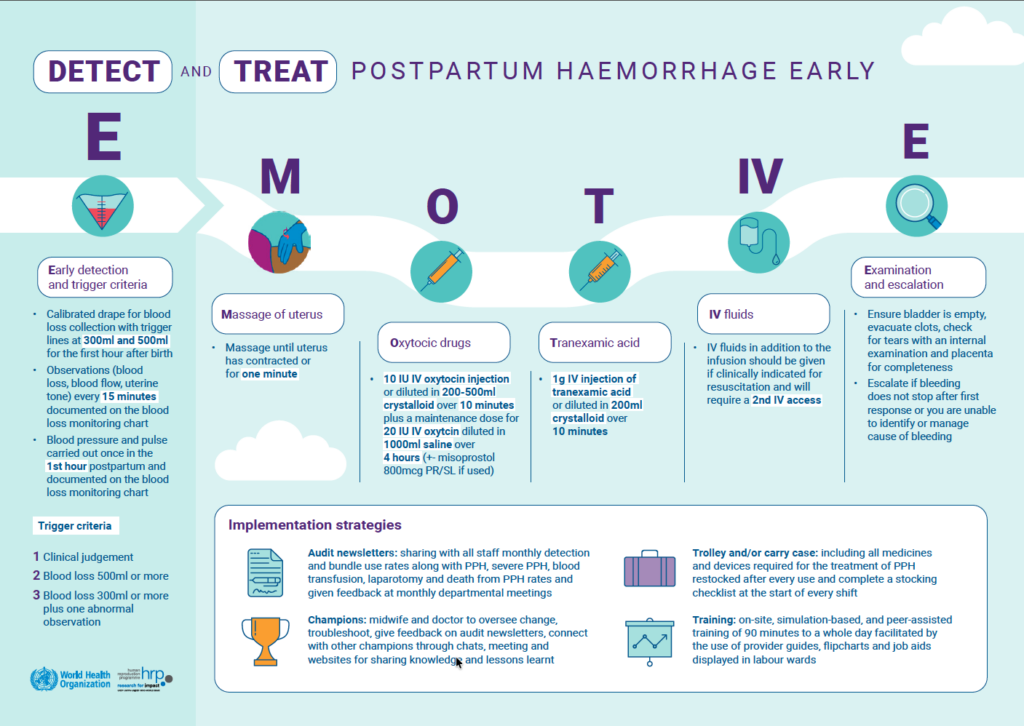
At Leku General Hospital, however, calibrated obstetric drapes are used routinely during childbirth as part of the E-MOTIVE approach. These drapes collect and accurately measure blood loss, allowing healthcare providers to identify postpartum hemorrhage earlier than they could through visual estimation alone.
Responding When Every Minute Matters
During Demekech’s labor, the maternity team monitored her closely. At approximately 3:40 PM, the calibrated drape detected excessive blood loss. Ten minutes later, she delivered.
The team’s response was rapid and coordinated. Within three minutes of identifying postpartum hemorrhage, the maternity team activated the complete E-MOTIVE bundle and began treatment immediately.
The E-MOTIVE bundle includes uterine massage, medicines that help the uterus contract and control bleeding, tranexamic acid to reduce blood loss, intravenous fluids, clinical examination, and escalation to advanced care when needed.
Because bleeding was detected early, treatment began before the hemorrhage progressed into a more severe and potentially irreversible emergency. Providers worked together to implement evidence-based interventions while continuously monitoring Demekech’s condition. What could have become a maternal tragedy instead became a powerful example of how preparation, innovation, and a coordinated response can save mothers’ lives.
Compassion During a Difficult Moment
While providers were treating the emergency, they were also supporting a mother who had just experienced the devastating loss of her baby. For Demekech, the emotional burden was immense.
“I was heartbroken after learning that my baby had died,” she recalled. “The staff treated me with kindness, comforted me, and helped me through the pain.”
The combination of clinical excellence and compassionate care helped build trust during one of the most difficult moments of her life.
“The health workers gave me confidence that I was in safe hands. Even during the most difficult moments, they reassured me and acted quickly to help me.”
A Life Saved and Hope for the Future
Thanks to the timely intervention, the postpartum hemorrhage was successfully controlled. Follow-up assessments showed significant improvement, and Demekech recovered under close observation and continued care.
Reflecting on her experience, she expressed gratitude for the healthcare providers who responded so quickly.
“I am alive today because of the care I received at Leku General Hospital. Their immediate response gave me another chance at life.”
Demekech continues to grieve the loss of her baby while looking toward the future with hope.
“Now I have hope. I survived, and I believe I will have the opportunity to become a mother again in the future.”
Strengthening Postpartum Hemorrhage Care
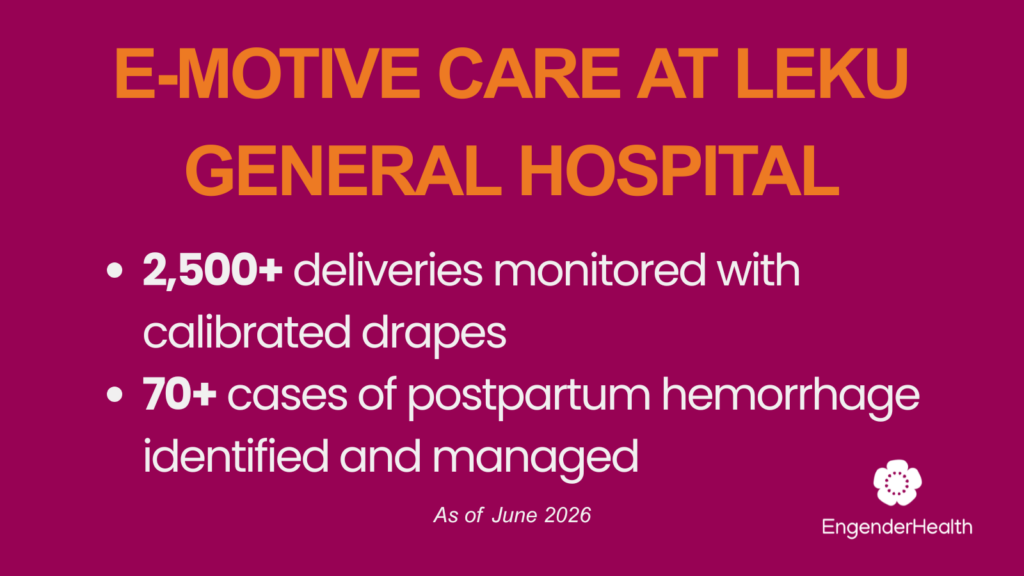
Demekech’s case is not an isolated success. Leku General Hospital has institutionalized the routine use of calibrated obstetric drapes for every delivery. Since implementing this approach, more than 2,500 mothers have delivered using calibrated drapes, and over 70 women experiencing postpartum hemorrhage have been successfully identified and managed through timely E-MOTIVE care.
For the maternity team, these results reinforce the value of investing in quality improvement, provider preparedness, and evidence-based maternal healthcare interventions.
“Demekech’s survival is a testament to what can be achieved when healthcare providers are equipped with the right tools and act without delay,” reflected members of the team.
Expanding Lifesaving Maternal Care
EngenderHealth is working with Ethiopia’s Ministry of Health to strengthen the quality and availability of maternal and newborn healthcare, including the early detection and treatment of postpartum hemorrhage. This work supports healthcare facilities and providers to integrate calibrated drapes, the E-MOTIVE PPH bundle, clinical mentorship, quality improvement, and other evidence-based practices into routine care.
Demekech’s story shows why that work matters. Postpartum hemorrhage can escalate rapidly, but deaths are preventable when providers recognize bleeding early and have the preparation, tools, and support to act immediately. Her story highlights how innovations such as calibrated drapes, combined with the E-MOTIVE PPH bundle, can transform maternal outcomes even in the most complex cases. More importantly, it reminds us that behind every maternal health statistic is a woman, a family, and a future worth protecting.