
One Hospital, Many Voices: How Asebot is Redefining Maternal and Reproductive Care in Ethiopia
By Merian Abdirkadir, Amina Kampise, Chaltu Mohamed, Dedefo Teshite, Dr. Fetya Abbagidi, Dr. Hana Gebregzabher, Betel Sahile and Nardos Delelegn, EngenderHealth Ethiopia
In Ethiopia’s Oromia Region’s West Hararge Zone—a predominantly pastoralist area marked by harsh geography—women’s health decisions are shaped by deeply rooted cultural traditions, religious beliefs, and the realities of distance and access. For years, Asebot Primary Hospital struggled with missed counseling opportunities and delayed responses to obstetric emergencies.
Today, the story is different.
Listening Before Counseling
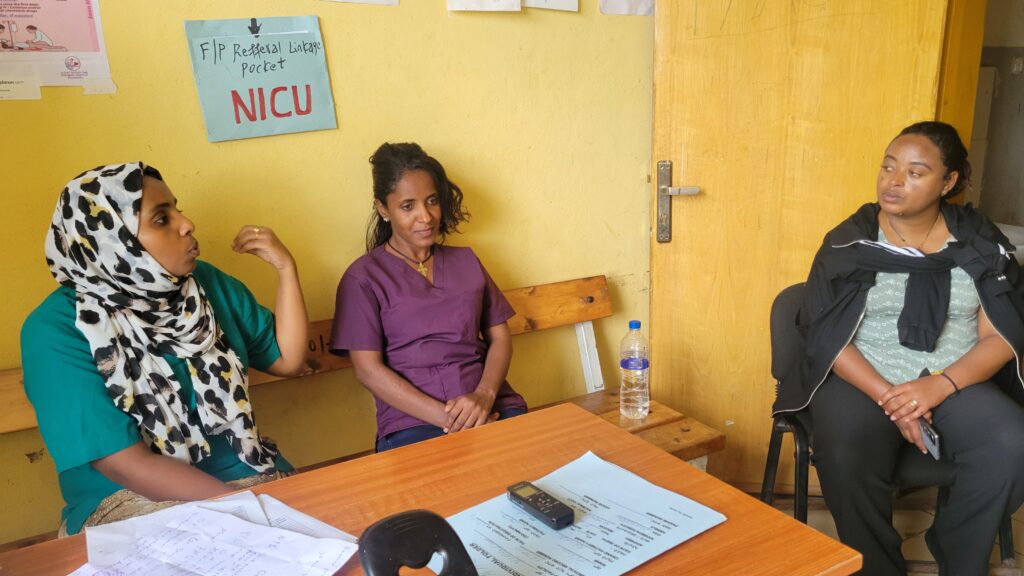
For Ikram Mohammed, a midwife at Asebot, conversations about family planning once ended before they even began.
“Acceptance was almost nonexistent. Many women believed family planning would harm them. Young women, especially, were afraid. Most simply said no.”
The resistance Ikram encountered wasn’t indifference: it was fear, shaped by deeply held beliefs, religious misconceptions, and years without clear, trusted information. Like her colleagues, she wanted to help women make informed choices, but without the right tools and approaches, even starting the conversation felt impossible.
A Subtle but Powerful Shift
The shift began with EngenderHealth’s RMNCH+PPFP project, which provided focused mentorship, technical support, and training in client-centered counseling and integrated service delivery. Instead of confining family planning discussions to a single clinic visit, providers began offering counseling wherever women already felt safe—during antenatal care, labor and delivery, postnatal visits, immunization sessions, and routine outpatient services.
Rather than persuading or pressuring, providers learned to listen. They asked open questions, acknowledged beliefs, and gently addressed misconceptions. Each conversation became personal; rooted in trust rather than instruction.
Ikram shared:
“Slowly, we started seeing women say yes. And more importantly, they understood why they were choosing a method.”
From Fragmented Services to Continuous Care
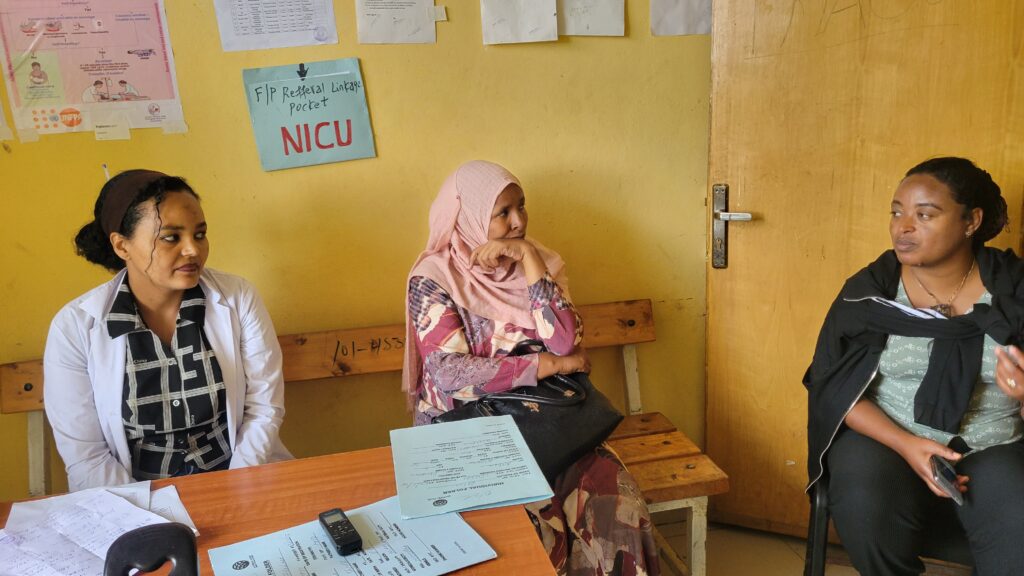
Zufan Tesfaye, another midwife, remembers how fragmented services once undermined care, especially for women seeking post-abortion services.
She reflected:
“Our comprehensive abortion care and family planning services were weak. Too many women left without counseling. Too many slipped through our fingers.”
Through ongoing mentorship, data-use support, and service integration, providers began to see care not as a single encounter but as a continuous journey—one that follows a woman wherever she enters the health system.
Today, every woman of reproductive age visiting Asebot Primary Hospital is offered family planning counseling, regardless of her reason for coming. This deliberate shift has strengthened continuity of care and significantly improved postpartum and post-abortion family planning uptake.
Beyond the hospital walls, the impact is spreading. Zufan now mentors health centers across the hospital’s catchment area, supporting providers to strengthen counseling, documentation, and service quality.
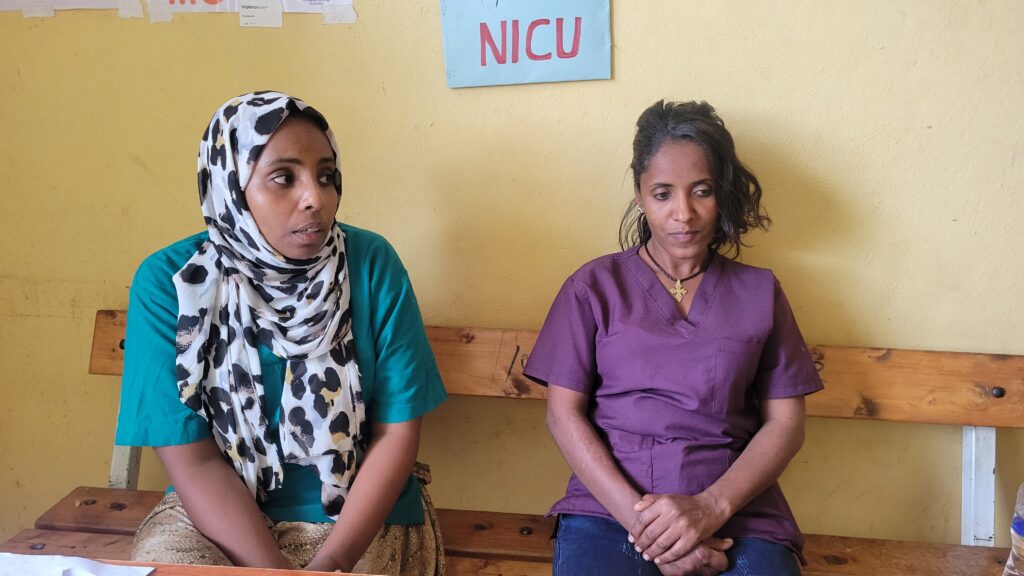
“When family planning methods are recorded clearly and completely,” she explains, “we don’t just have better data—we have better care.”
Precision in Managing Postpartum Hemorrhage
For Emnet Damtew, the Maternal and Child Health Focal Person, the most profound change has been in managing postpartum hemorrhage (PPH)—one of the leading causes of maternal death.
Emnet recalled:
“There was a time when we managed PPH very subjectively. Many mothers were sent home, only to return later; weak, frightened, and already bleeding too much. By then, the danger was far greater.”
With hands-on training and the introduction of calibrated postpartum drapes and the E-MOTIVE bundle, the maternity ward gained something it had never truly had before: certainty.
Instead of estimating blood loss, providers now measure it accurately, identify danger early, and act without delay.
Emnet said:
“The drapes have worked wonders for us. We identify PPH early. We treat it quickly. Everyone feels safer—mothers and providers alike.”
The change goes beyond tools. Mothers are monitored more closely in critical moments after birth. Providers respond with confidence rather than fear. Decisions are faster, outcomes are better, and lives are protected when they are most vulnerable.
A Facility Transformed
With focused capacity building, technical support, and mentorship through EngenderHealth’s RMNCH+PPFP project, services are better integrated, postpartum hemorrhage is managed with greater precision, and more women are choosing family planning after childbirth and following abortion—because they finally feel informed, respected, and supported.
What was once a facility defined by missed opportunities is now a place of confidence, coordination, and compassionate care. At Asebot Hospital, change is not only reflected in registers and protocols: it is felt in conversations, decisions, and the growing trust of a community that sees women met with dignity at every step of care.