
A Tiny Heart, A Mother’s Embrace, and a Second Chance at Life
The Story of a Premature Baby Who Defied the Odds at Wondogenet Primary Hospital
By Tesfaye Ordolo, EngenderHealth Ethiopia
When Misgana Markos first held her daughter, fear overshadowed joy.
Born nearly two months too early, her baby weighed only 2.4 pounds (1.1 kilograms); small enough to fit in the palm of her mother’s hands.
Every breath felt uncertain, and every passing hour carried questions no parent should have to ask.
“I was terrified,” Misgana recalls. “But I never lost hope.”
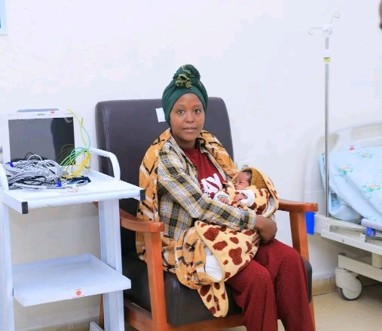
Misgana with her baby. Photo courtesy EngenderHealth Ethiopia.
Misgana’s daughter was born at Wondogenet Primary Hospital at an estimated 30–32 weeks of pregnancy.
The newborn was immediately admitted to the Neonatal Intensive Care Unit (NICU) with complications related to prematurity, very low birth weight, and early-onset neonatal sepsis.
The first few days were critical as doctors and nurses worked around the clock to stabilize her condition through careful monitoring, treatment for infection, and specialized feeding.
Kangaroo Mother Care for a Premature Newborn
Misgana and her baby were transferred to the hospital’s Kangaroo Mother Care (KMC) unit, where healing came not from machines alone, but from the warmth of a mother’s embrace.
For more than a month, Misgana held her daughter against her bare chest for hours every day.
Skin-to-skin contact kept the baby warm, supported breastfeeding, regulated her breathing, and strengthened the bond between mother and child. Nurses and midwives stood beside them, providing encouragement, guidance, and continuous clinical care.
“The first day was filled with fear,” Misgana says. “Today, I look back with gratitude for every step of my baby’s recovery.”
Growing Stronger, One Day at a Time
Day by day, gram by gram, the baby grew stronger.
After one month and three days of dedicated care, she had gained enough weight to be discharged at 3.9 pounds (1.8 kilograms).
Before leaving the hospital, Misgana received counseling on continuing Kangaroo Mother Care at home, exclusive breastfeeding, recognizing newborn danger signs, and attending regular follow-up visits. The baby also began vitamin D and iron supplementation to support healthy growth.
Three weeks later, the mother returned to the hospital carrying a baby that many of the staff could hardly recognize.
The once fragile newborn now weighed 5.5 pounds (2.5 kilograms). Her healthy weight gain was a powerful sign that the care she had received in the hospital and the love and commitment her mother continued to provide at home were working.
Looking at her daughter, Misgana smiled with emotion.
“የሰው ቅርጽ የሌለው ነበር፤ አሁን ሰው ሆኖልኛል።” which translates to:
“She didn’t even look like a fully formed human before. Now she has become a healthy child.”
For the healthcare providers, it was a moment that reminded them why their work matters. For Misgana, it was a future she had once feared she might never experience.
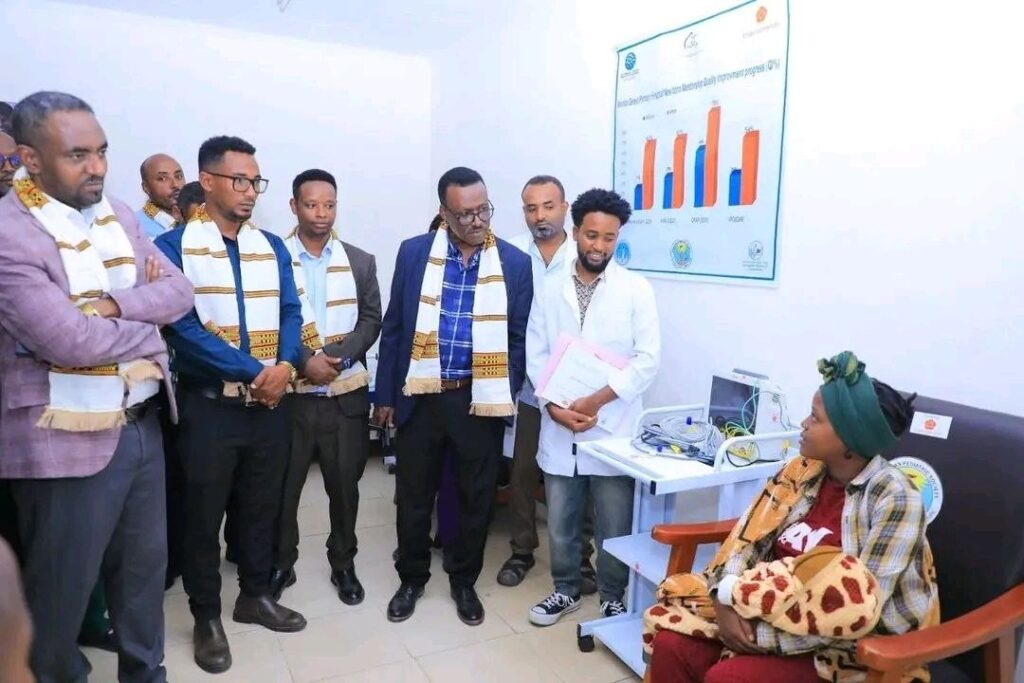
Strengthening Newborn Care at Wondogenet Primary Hospital
This story also reflects a broader transformation taking place at Wondogenet Primary Hospital.
With support from the Integrated RMNCH+ Project, the hospital established Kangaroo Mother Care services by strengthening the capacity of neonatal healthcare providers through specialized training on essential newborn care and immediate Kangaroo Mother Care, followed by ongoing catchment-based clinical mentorship.
These investments have enabled healthcare workers to deliver high-quality, evidence-based care for premature and low-birth-weight newborns.
Expanding Lifesaving Care for Premature and Low-Birth-Weight Babies
Since the introduction of these services, approximately 30 premature and low-birth-weight babies have survived and thrived through Kangaroo Mother Care at the hospital.
Behind each of those numbers is a family whose story could have ended differently.
This baby’s journey from 2.4 pounds (1.1 kilograms) at birth to 5.5 pounds (2.5 kilograms) just weeks later is more than a story of weight gain. It is a story of resilience, a mother’s unwavering love, skilled healthcare providers who refused to give up, and a health system investing in proven, lifesaving care.
It is a reminder that when quality care meets a mother’s determination, even the smallest beginnings can grow into healthy futures.