
Beyond the 16 Days: Collective Action for Lasting Change in GBV Prevention and SRHR Advocacy in Ethiopia
By Meron Aragaw, GYSI Advisor, EngenderHealth-Ethiopia
In honor of the 16 Days of Activism Against Gender-Based Violence (GBV), EngenderHealth-Ethiopia partnered with government, NGOs, the media, and the private sector to accelerate efforts in GBV prevention, gender norm change, and Sexual & Reproductive Health & Rights (SRHR) advocacy.
From November 25 to December 10, 2024, EngenderHealth-Ethiopia led initiatives—including trainings, awareness campaigns, and policy dialogues—to equip partners with the tools to address GBV directly. This blog highlights key actions and insights, aiming to inspire sustained progress in advancing gender equality and supporting survivors of GBV.
Signing of a Memorandum of Understanding (MoU) between EngenderHealth-Ethiopia and Ethiopian Women Development Organization (EWDO)
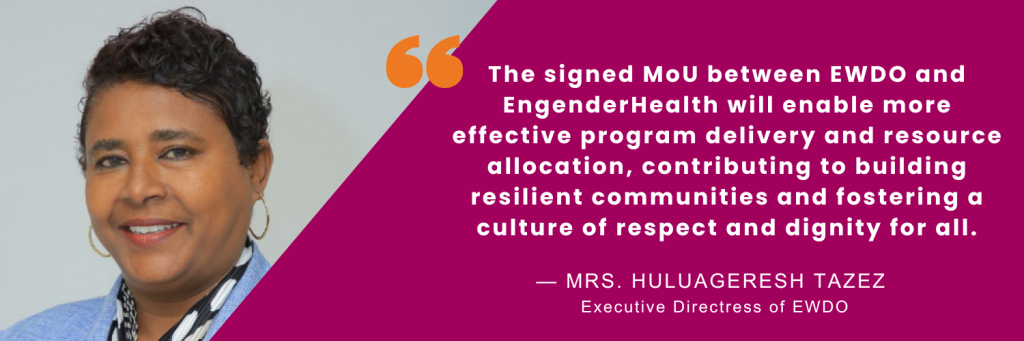
In October 2024, EngenderHealth-Ethiopia and the Ethiopian Women Development Organization (EWDO) signed a memorandum of understanding (MoU) to strengthen their strategic collaboration under the Rights-Based Approach for Enhancing SRHR in Ethiopia project.
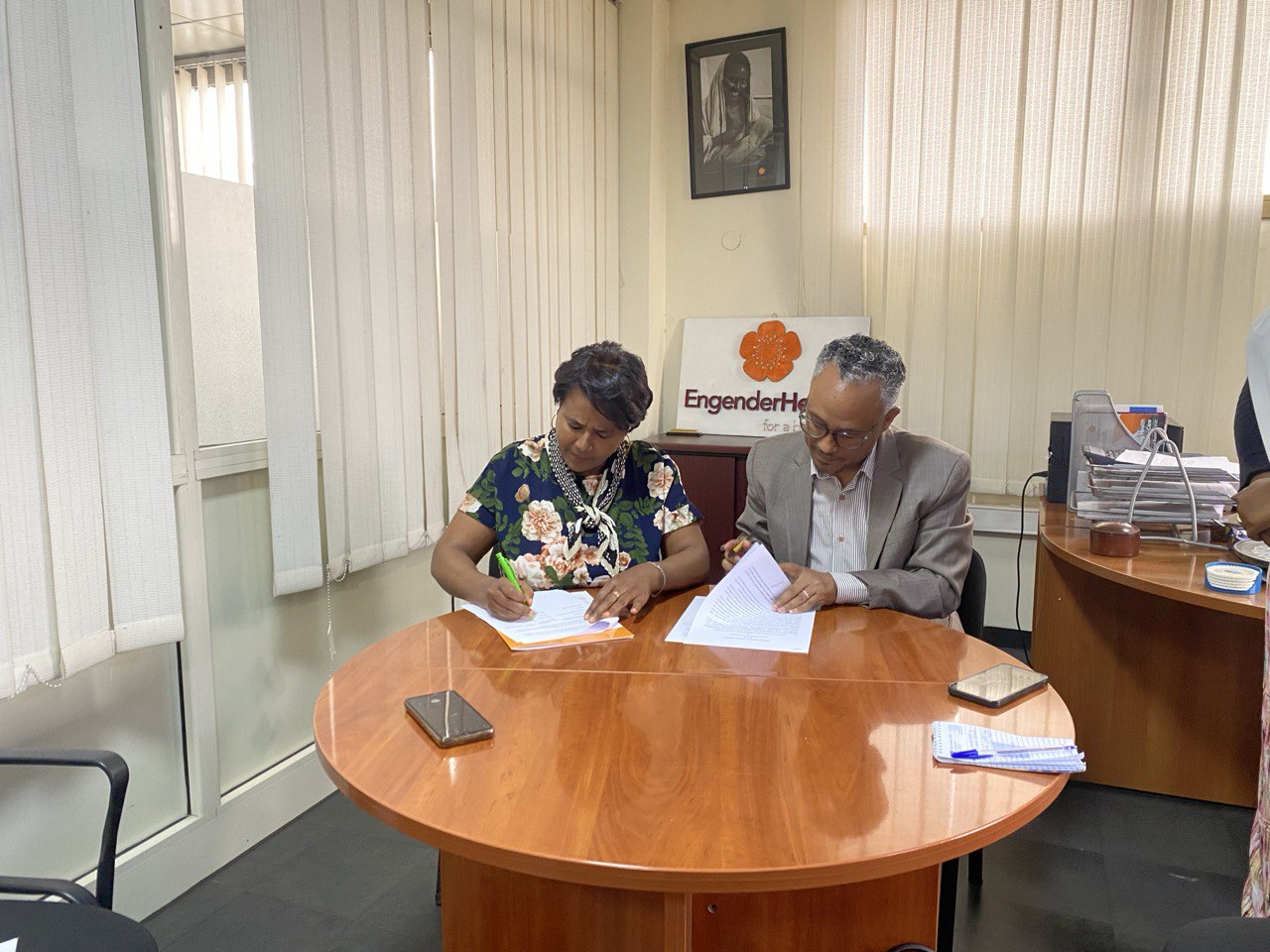
EngenderHealth-Ethiopia and the Ethiopian Women Development Organization (EWDO) sign a Memorandum of Understanding (MoU) to strengthen collaboration in advancing gender equality and GBV prevention. Photo Credit: EngenderHealth-Ethiopia.
Founded in December 2023, EWDO is a women-led organization focused on advancing women’s rights. Established by women professionals with over 10 years of experience in gender equality and women’s rights programming, EWDO envisions a future where gender justice, an equitable society, and a violence-free life are realities for all Ethiopians. The organization works to empower women through multi-dimensional programs, including in the digital space, promoting gender equality through partnerships with diverse stakeholders.
What strategic interventions will EWDO and EngenderHealth-Ethiopia jointly act on?
The MoU signed between EngenderHealth-Ethiopia and the EWDO formalizes a strategic partnership to tackle key issues around SRHR, GBV, and the empowerment of women and youth, while promoting gender equality.
Together, the organizations will build a strong, structured movement focused on community engagement, policy advocacy (including in the digital space), and evidence generation to inform decision-making on SRHR, GBV, and gender equality.
As part of its commitment to localization and strengthening systems, EngenderHealth-Ethiopia will also support EWDO in building organizational capacity. This collaboration will help both organizations influence policy, legislation, and implementation around SRHR, GBV, and the empowerment of women and youth, driving meaningful change in Ethiopia.
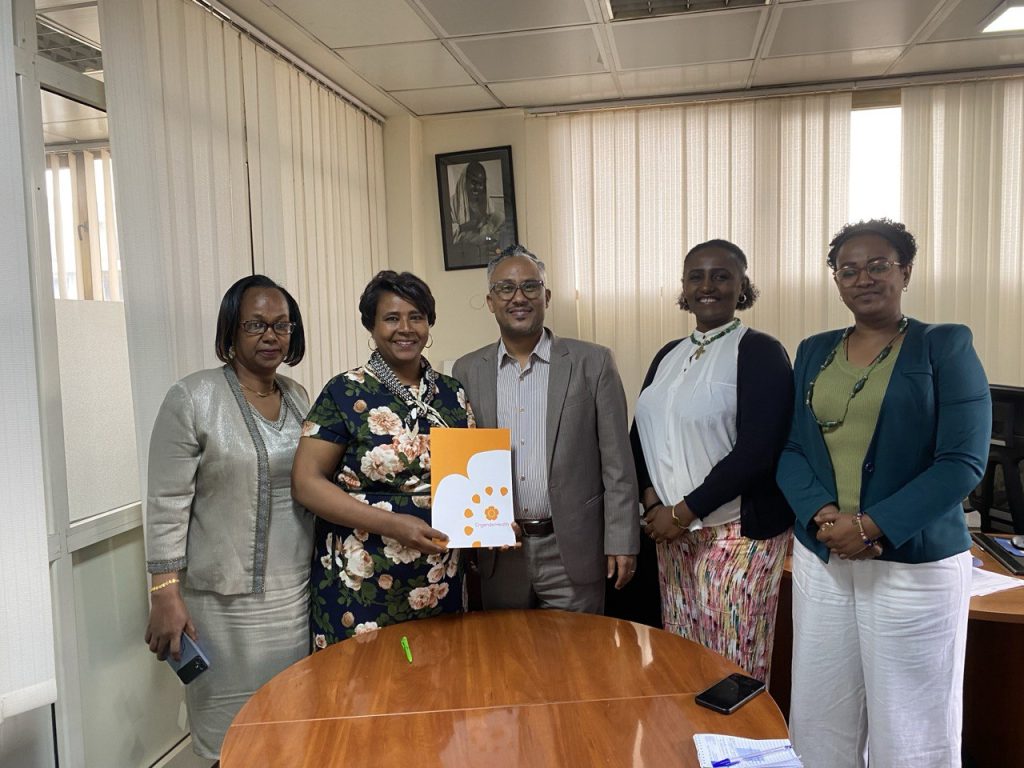
Photo credit: EngenderHealth-Ethiopia.
Key outcomes of the activities that EngenderHealth and EWDO have executed so far
The collaboration between EngenderHealth-Ethiopia and EWDO began even before the MoU was signed, with both organizations already engaging in key policy advocacy efforts. These initiatives brought together lawmakers, law enforcers, and the justice system, helping to emphasize the importance of addressing gender equality, GBV, and SRHR in policies and structures.
This collaboration not only strengthened ties with key stakeholders but also helped bridge knowledge gaps and challenge biases around gender equality, SRHR, and GBV.
EngenderHealth-Ethiopia’s strategic engagement with media partners for amplified GBV mitigation
Under the theme, “Engaging Journalists and Communications Experts for Effective Health Communications,” EngenderHealth-Ethiopia, in partnership with the Ministry of Health (MoH), hosted a capacity-building training for mainstream and social media professionals.
The training revolved around SRHR and gender, youth & social inclusion (GYSI) issues. The training aimed to connect the media with women’s health to ensure accurate, clear, and impactful dissemination of SRHR related information to a diverse population in a gender sensitive, youth responsive and socially inclusive manner.
How does the GYSI & SRHR training equip mainstream and social media experts?
The sessions provided participants with key insights into the current state of SRHR, family planning, GBV, and safe abortion services in Ethiopia, using national data. Attendees gained a deeper understanding of the challenges, as well as the progress Ethiopia has made in these critical areas.
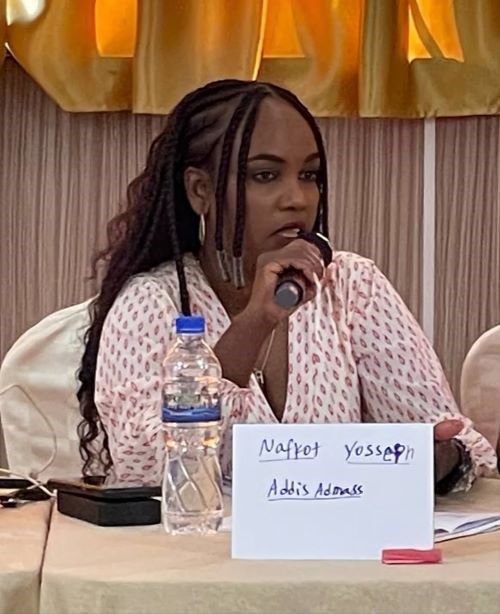
Nafkot Yosseph speaks at a media training on GBV held by EngenderHealth-Ethiopia. Photo Credit: EngenderHealth-Ethiopia.
The interactive GYSI exercises gave media experts a chance to explore gender norms, power dynamics, and societal values that influence their work. Participants shared perspectives, clarified personal values, and learned from one another, fostering a richer understanding of how their backgrounds shape their reporting.
This training also heightened media experts’ awareness of crucial reporting principles when covering health, gender, and GBV issues, including sensitivity, accuracy, verified sources, and the importance of clarity. They also gained a better understanding of when and how to protect anonymity, ensuring ethical and responsible journalism.
What do we expect from the synergized movement of EngenderHealth-Ethiopia and media partners in combating GBV, promoting SRHR and gender equality?
The capacity-building training for media experts is part of a broader effort to establish a strategic partnership with mainstream and social media outlets. EngenderHealth-Ethiopia engaged with high-level officials from the Ethiopian Broadcast Authority, the body responsible for overseeing media institutions in Ethiopia. This resulted in an agreement to sign a MoU between EngenderHealth-Ethiopia and the Authority.
This partnership will help integrate SRHR, GBV, and GYSI issues into media reporting and programming, ensuring more sensitive, inclusive coverage of these critical topics—especially for survivors of GBV.
High-Level Panel Discussions on Response Mechanisms for GBV Survivors
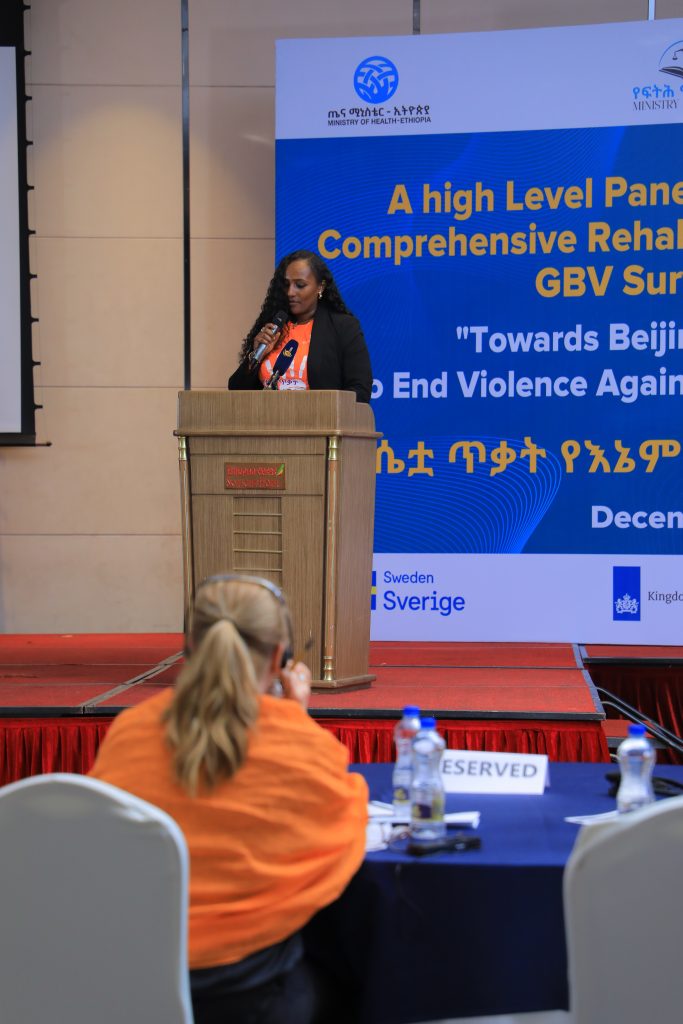
EngenderHealth-Ethiopia hosted a high-level panel on comprehensive rehabilitation for GBV survivors, including those affected by conflict-related GBV. The discussion brought together key stakeholders—government, CSOs, justice bodies, donors, and media partners—to emphasize the urgent need for survivor-centered rehabilitation. The panel fostered collaboration, resource-sharing, and provided a platform for grassroots voices to share challenges, lessons, and recommendations, driving advocacy for policy change and improved GBV response.
Alerting Policy Makers and Enforcers on GBV Response Especially under Humanitarian Settings
In this high-level panel, policymakers from justice, women & social affairs, health sectors, and key civil society organizations shared insights on efforts, successes, challenges, and lessons learned in providing rehabilitation for GBV survivors, including in humanitarian settings.
Discussions highlighted critical gaps in policy focus, law enforcement, structure, and service delivery, urging immediate action to strengthen GBV prevention and response mechanisms over the next year.
Deliberations on Comprehensive Rehabilitation Services for Conflict Related GBV Survivors
The high-level panel discussed Ethiopia’s current GBV response, challenges, and lessons learned, particularly in conflict-affected regions like Amhara, Tigray, and Afar. It also addressed key areas for strengthening budget allocation, mental health services, and economic support for GBV survivors, especially in conflict zones.
The discussion aimed to re-establish collaboration between government and civil society organizations, integrating efforts for comprehensive mental health and psychosocial rehabilitation. It also focused on updates to Ethiopia’s transitional justice process, specifically regarding conflict-related GBV, and identified policy, legislation, and structural changes for long-term action.
Our Asks on Proposed Systemic Changes in the Justice Administration regarding GBV Crimes
The high-level panel brought together stakeholders from the legislative, executive, judiciary, civil society, and development partners to identify critical areas for future collaboration on comprehensive rehabilitation for GBV survivors, including those in conflict zones. Both the panel and plenary discussions generated actionable plans for improving rehabilitation services.
Key joint statements were crafted as commitments to be delivered within the next year, focused on providing better support for survivors of GBV, including conflict-related cases:
- The Ethiopian National GBV Prevention & Response and Gender Policy will be endorsed.
- Referral linkages, monitoring, and accountability mechanisms will be strengthened to ensure inclusive rehabilitation services for GBV survivors.
- Structural and infrastructure gaps will be addressed to ensure survivors can access justice, medical, psycho-social, and economic support.
- A national study will be conducted to identify gaps in Ethiopian Criminal Law and advocate for a stand-alone GBV law.
- New strategies and approaches will be developed to address emerging GBV crimes and improve survivor care.
- Financial and technical support will be provided to ensure comprehensive retaliation support for GBV survivors.
- A national GBV data management system, including sex offenders’ data, will be established.
- Community-based social therapy mechanisms will be nurtured to amplify the voices of GBV survivors in conflict areas and aid their healing.
- Ongoing capacity-building training will be provided to bridge knowledge gaps for experts responding to GBV cases.
- The Ethiopian Transitional Justice System will ensure SGBV crimes committed during conflicts receive due attention.
Accordingly, EngenderHealth-Ethiopia will be responsible to follow up the progress of the promised actions, to support implementing stakeholders and coordinate the overall process.
The transformation of support for GBV survivors—especially those in conflict zones—requires collective action. Government, civil society, and development partners must unite, not just during the 16 Days of Activism, but year-round, to eliminate the barriers preventing survivors from accessing the justice, care, and dignity they deserve.
Together, we can create a future where survivors receive the comprehensive support they need to heal and rebuild their lives. The time for lasting change is now.
Published: December 9, 2024