
Seeds of Change: Usunga Primary’s Transformation through Health and Nutrition
By combining sexual and reproductive health education with nutrition and life skills, Usunga Primary is helping students build healthier, more resilient futures.
In the heart of Sikonge District in Tanzania’s Tabora Region, Usunga Primary School once mirrored the challenges of many rural schools across the country—overcrowded classrooms, limited resources, and a glaring absence of life-saving education on health and nutrition.
Serving 620 pupils, this government-run school was a quiet reflection of untapped potential, where students grew up without structured knowledge on sexual and reproductive health (SRH), personal hygiene, or even the basics of nutrition education.
But in 2023, a single spark ignited change.
Growing Strong: Youth in Tanzania Take Charge of Health, Nutrition, and Their Futures
With the introduction of the Building Rights for Improved Girl’s Health in Tanzania (BRIGHT) project, implemented by EngenderHealth, Usunga Primary school staff were trained in Comprehensive Health Education.
One teacher trained through BRIGHT’s initiative, Onesmo Ngao, returned from the training with technical knowledge and a vision. He turned that vision into action.
He began with 70 adolescents—35 girls and 35 boys—forming two vibrant peer education groups. What started as weekly sessions on SRH and nutrition soon blossomed into something much bigger: a revolution in student-led learning. These sessions tackled real issues—adolescent development, healthy relationships, hygiene, and balanced diets—topics that had long been absent from their education.
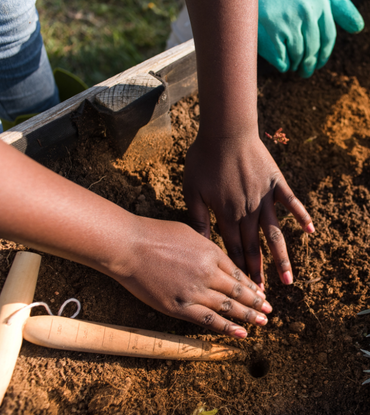
To bring theory to life, a modest 25-square-meter demonstration garden was planted. More than just vegetables, it grew into a powerful symbol of youth empowerment.
Growing Knowledge, Growing Futures
Interest skyrocketed in the program. What was once two peer groups quickly doubled to four, engaging 140 students in dynamic, adolescent-centered activities.
To meet this growing enthusiasm, the school expanded the garden from 25 to 800 square meters—now a flourishing hub of healthy vegetables and fruits. And this wasn’t just food—it was fuel for the school lunch program, nourishment for young minds, and, importantly, a source of income.
In 2024 alone, students earned TSH 373,200 (about $138 USD*) from selling surplus produce to the local community. That amount is roughly equivalent to a month’s decent standard of living in rural Tanzania.
This was entrepreneurship in action. Students applied life skills taught through the BRIGHT project to build a small but powerful local economy rooted in sustainability, education, and health.
Leadership Beyond the Classroom
What truly sets Usunga apart is the leadership ecosystem it has nurtured. Each peer group is structured like a miniature organization—with designated roles including an irrigation leader, marketing leader, health leader, sales team leader, and a cashier.
This model instills a deep sense of ownership, discipline, and real-world responsibility among the students. It’s not just about growing crops; it’s about growing leaders.
Parents and community members who once viewed the school as merely an academic space now see it as a vibrant learning hub: a place where health, education, and innovation meet. Students aren’t just learning, they are teaching, leading, and transforming their own futures.
A Sustainable Model to Learn From
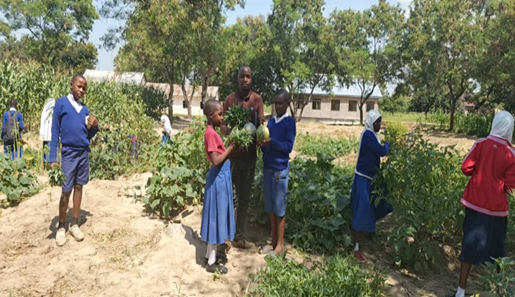
Usunga Primary has become a beacon of hope and an example of what’s possible when adolescent health education is paired with practical life skills and surrounded by community support. The school’s culture has shifted to one of health promotion, youth empowerment, and community learning. The school is now regularly visited by neighboring institutions and local leaders eager to learn from its model.
The transformation of Usunga Primary proves a powerful truth: you don’t need perfect conditions to make progress—just a clear purpose and a desire to change. With minimal resources but maximum commitment, this rural school has shown that children can be empowered to become agents of change in their schools, families, and communities.
The BRIGHT project didn’t just deliver a series of training courses. It planted the seeds for a movement, one where knowledge grows alongside confidence, and where schools like Usunga are turning challenges into opportunities, one harvest at a time.
Thank you to Emiliana Maswi and Kate Tibone for sharing the story of Usunga Primary School’s transformation.