
Against the Odds: Restoring Dignity to Women in Guinea After USAID Withdrawal
The country of Guinea, in West Africa, has one the highest maternal and newborn mortality rates in the world.
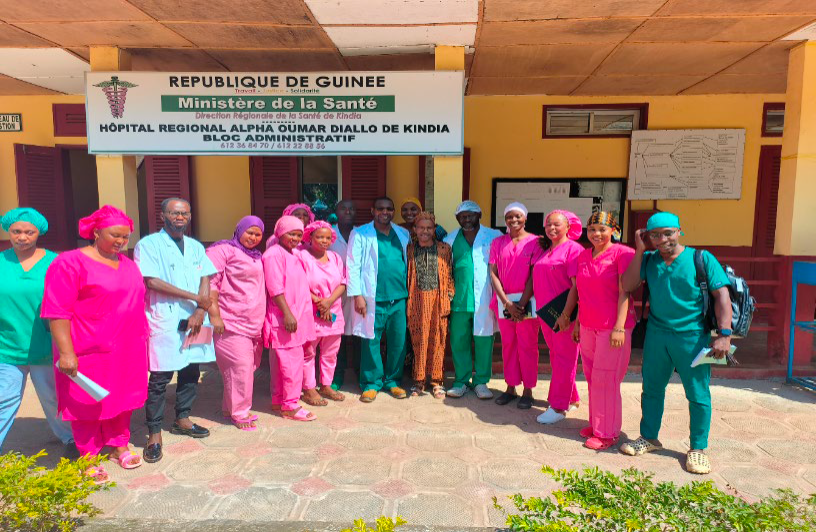
The dedicated Kindia Hospital providers who stood by their patients and saw them through the full arc of care.
There are many causes for this, including insufficient access to emergency obstetric and neonatal care. For every woman who dies, many more experience complications—including fistula, a severe childbirth injury that causes women to leak urine and/or feces uncontrollably.
Most women with fistula have also lost their babies during the labors that caused their injuries.
These women face profound social isolation, are unable to participate in family and community life, and experience devastating financial hardship.
Under a USAID-funded project called the MOMENTUM Safe Surgery in Family Planning and Obstetrics, EngenderHealth supported hospitals in Guinea to deliver safe, high-quality repair surgeries for women with fistula and provided physical therapy and psychosocial services to help them recover fully—from the physical trauma and from the emotional and economic toll.
EngenderHealth has been a trusted partner of the health system and communities in Guinea for over a decade, committed both to treating fistula and to preventing maternal and newborn deaths and disabilities through holistic reproductive and maternal health care.
In January 2025, dozens of women had been screened, diagnosed, and deemed medically eligible for fistula repair in Kindia, Guinea. A local partner hospital had allocated their infrastructure and other resources to enable these repairs, and local surgeons were ready to provide high-quality surgeries and link women to essential post-operative care and psychosocial support.
Then, on January 27th, EngenderHealth received a stop-work order from USAID. Women who had been promised fistula repair surgery were at risk of having their surgeries canceled. They had been given hope, then abruptly that hope had been cast aside by decisions made far away, by people who did not know their names or their needs.
But the community didn’t give up.
Within days, EngenderHealth secured emergency private funds so that our partners in Guinea could provide the surgeries independently—outside of the halted USAID project. Rather than being sent home, the surgeries went forward.
The twenty-one women who had been scheduled for fistula repair at our partner hospital in Kindia received their surgeries. Each woman received the full course of care, including post-operative monitoring, evaluation, and counseling, before being discharged to return to her community.
Three women had complex fistulas that required additional care. We are working closely with hospital colleagues to ensure that these women are included in an upcoming special surgical campaign for complex fistula repairs that will be conducted by a European partner.
EngenderHealth is deeply grateful to our donors, partners, and frontline colleagues who acted quickly and collectively to ensure that the women who had made the long and often difficult journey to fistula repair were not denied the transformative care they deserved at the final moment. We are proud to stand in solidarity with the women of Guinea and to continue to fight for health, dignity, and justice.