Where Prevention Begins: Local Leaders Confront Gender-Based Violence in West Africa


Across Benin, Burkina Faso, Côte d’Ivoire, and Togo, local leaders are advancing gender-based violence prevention through advocacy, community action, and stronger institutions.
Across West Africa, violence continues to shape the boundaries of women’s lives.
In Benin and Togo, nearly one in three women have reported physical or sexual violence. In Burkina Faso, 56% of women aged 15 to 49 have undergone female genital mutilation. In Côte d’Ivoire, a quarter of women have experienced physical violence. These realities reflect entrenched norms that restrict safety and personal freedom.
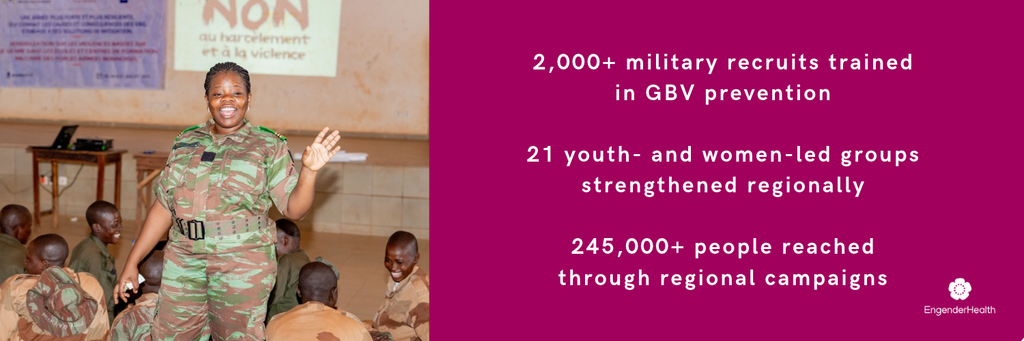
EngenderHealth worked across Benin, Burkina Faso, Côte d’Ivoire, and Togo to strengthen locally led prevention of gender-based violence (GBV). Youth- and women-led groups received mentorship and organizational support to sharpen advocacy, improve services, and coordinate across borders.
Across the region, our educational campaigns combined creativity and public dialogue to open conversations about violence and accountability.
This work extended beyond traditional community spaces.
In Benin, prevention entered national institutions, including the military. By training new recruits in gender-based violence awareness and establishing gender focal points within each barracks, EngenderHealth created a permanent internal system for reporting abuse, ensuring that the protection of women was treated as a core duty of service.
Advocacy also shaped policy. In Côte d’Ivoire, our efforts helped inform amendments to a domestic violence bill that now provides survivors with clearer paths to justice and more robust legal safeguards.
We also trained municipal leaders to turn these national laws into action, ensuring they have the tools to hold offenders accountable and provide immediate support to those in need.
By shifting power to local leaders and ensuring institutions take full responsibility for the safety of those they serve, EngenderHealth is helping to build a world where communities stop violence before it starts.
“We are changing who holds power. When young people and women lead, communities move from surviving violence to preventing it. Progress does not come from outside. It grows when local leaders organize, speak out, and drive the change themselves.” — Hermine Bokossa, Program Officer, Benin
This article is adapted from EngenderHealth’s 2025 Annual Report. Explore the full report to learn more about our work to advance sexual and reproductive health and rights and gender equality.