
Unpacking and Eradicating Bias: Medical Student Learns to Champion Safe Abortion Care
“In our community, cultural norms and beliefs tend to view abortion as unacceptable and a moral transgression. Given that healthcare providers are members of this same community, we bring these prevailing perspectives with us to our workplace. The communities’ cultural beliefs made me judgmental about the services and the clients.”
Challenging Personal and Cultural Bias in Abortion Care
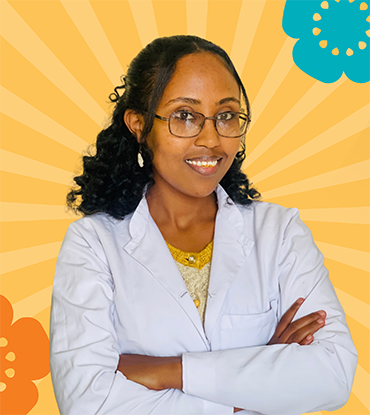
Dr. Hymanot is a 25-year-old medical intern at Saint Paulo’s Hospital Millennium Medical College in Addis Ababa, Ethiopia, where prevailing sociocultural norms and beliefs in her society related to abortion make providing safe abortion care a challenge.
During her medical studies, Dr. Hymanot’s interest in reproductive health grew as she observed a septic ward for women admitted with postabortion complications. This experience motivated her to better understand the importance of providing safe abortion care.
Dr. Hymanot is a 25-year-old medical intern at Saint Paulo’s Hospital Millennium Medical College in Addis Ababa, Ethiopia, where prevailing sociocultural norms and beliefs in her society related to abortion make providing safe abortion care a challenge.
During her medical studies, Dr. Hymanot’s interest in reproductive health grew as she observed a septic ward for women admitted with postabortion complications. This experience motivated her to better understand the importance of providing safe abortion care.
Training that Transforms: Confronting Bias Through Values Clarification
Dr. Hymanot eagerly participated in a value clarification and attitude transformation (VCAT) workshop organized by EngenderHealth and its partners through the Destigmatizing Safe Abortion Care Among Health Professionals in Ethiopia project. The workshop—which included lectures, exercises, and discussions—had a profound impact on her. The various activities allowed her to confront her biases and understand different perspectives on abortion, including the diverse circumstances that lead women to seek safe abortion care. Further, it helped her overcome her internal conflict by emphasizing the importance of providing unbiased and compassionate care.
“Similarly, women seeking these services may also be influenced by the prevailing social perceptions, potentially deterring them from accessing local care. This could lead women to seek services elsewhere, or even to experience self-blame and concerns about the impact on their family’s reputation and well-being.”
The workshop increased her confidence and strengthened her conviction to provide comprehensive, evidence-based, equitable healthcare—regardless of the cultural and social stigma surrounding abortion. Dr. Hymanot has begun to break down the barriers that previously hindered her from fully supporting safe abortion care. She has become vocal in advocating for safe abortion care on social media and during discussions with her peers, challenging those with negative attitudes.
From Judgment to Advocacy: A New Commitment to Unbiased Care
“The VCAT exercises included group discussions that were impactful for me. The most inspiring part was the group discussion on the topic ‘Me and She’ (Ene ena Eswa), which helped me realize that I had been applying a double standard in providing care. I tended to judge whether the woman seeking abortion services ‘deserved’ care based on her circumstances, rather than approaching it without bias. The group discussions during the training were instrumental in helping me overcome these preconceptions and commit to providing safe abortion care to all who need it, without judgment.”