
Transforming Care: Dahabo Gimbe’s Journey as a Champion Family Planning Service Provider
By Axumite Tsegaye, Guyatu Amde, Dr. Siyoum Enkubahri, Dr. Gizachew Balew, Amina Kanpise, Olifan Degebas, Diana Copeland
“When I was a child, most mothers in my community gave birth at home and some of them died immediately afterwards. I always wondered why it happened and wanted to find a solution. I have wanted to become a health professional ever since.” – Dahabo Gimbe, Family Planning service provider at Dubuluk Health Center
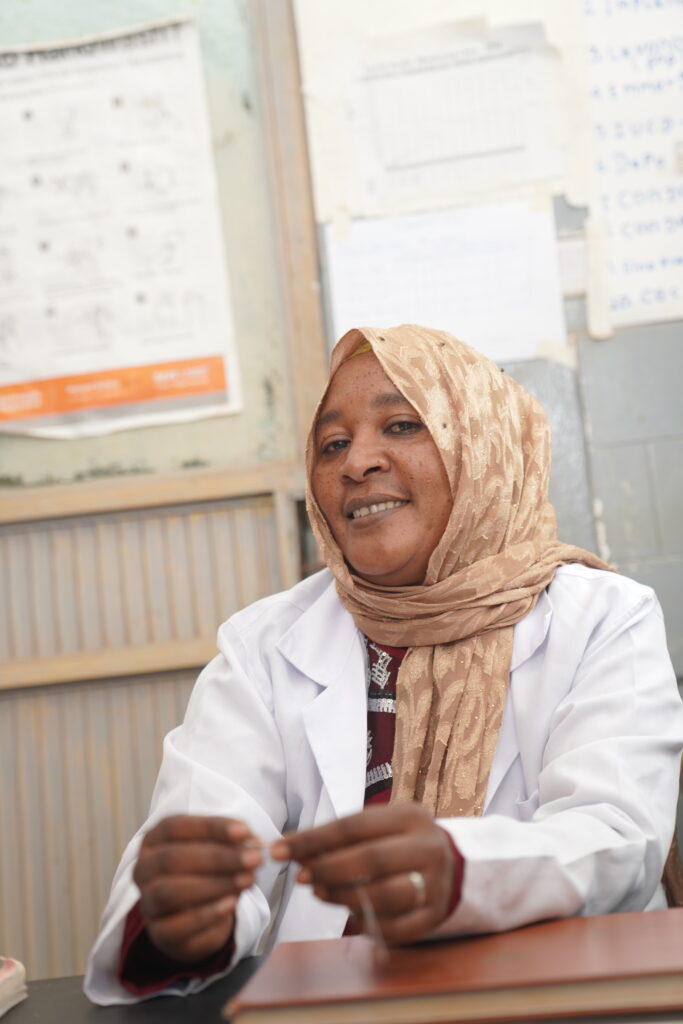
Born and raised in Mega town in Borena Zone, Dahabo was determined to make her dreams come true. She studied Nursing at Hawassa University before returning to her hometown to assist the mothers who inspired her. She has worked at the Dubuluk Health Center for the past 13 years, most recently as a family planning service provider where she gives client-centered counseling and offers different methods of contraceptives.
Dahabo remembers how embarrassing discussing contraceptives was for the community, explaining, “If a woman wants to get a family planning service, she calls me from far away, afraid someone might notice her. Because of the misunderstanding in the community, most of them were not interested, especially using an intrauterine device (IUD). I also never imagined that I would be able to provide IUD, because I felt incompetent.’’
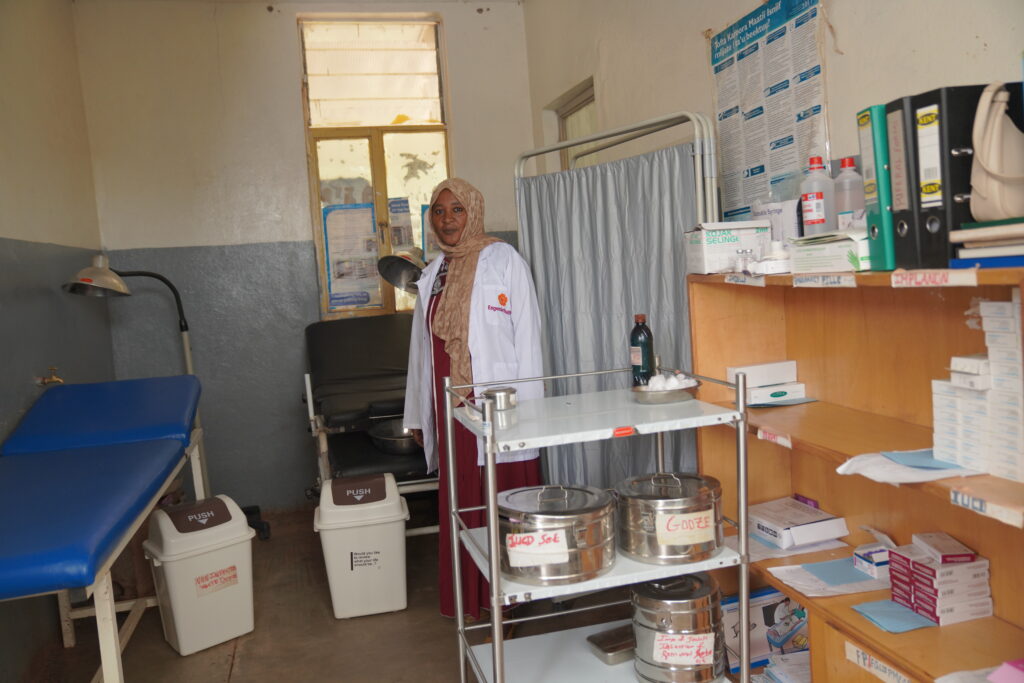
In February 2023, Dahabo completed EngenderHealth Ethiopia’s Comprehensive Contraceptive training through the Reach, Expand, and Access Community Health (REACH) project. During the clinical practice, she observed that most women found using an IUD to be comfortable. She then analyzed the wider impact in Dubuluk, where most of her clients are unaware of birth spacing as well as long-term contraceptive use. She was very eager to apply what she learned despite the challenges. “I said to myself, ‘I would be the first to start the service at Dubuluk,’” she remembers.
She provided the first IUD at Dubuluk Health Center immediately after the training on February 26, 2023. She has successfully provided over 100 IUDs since then.
In addition to offering quality family planning services, she transformed her facility into a hands-on Comprehensive Contraceptive Training Center for trainees from the neighboring Continuous Professional Development center. Dahabo leveraged her expertise and skills to train four colleagues using a Structured On-the-Job Training (SOJT) approach. This initiative significantly boosted the availability of well-trained personnel at the Dubluk Health Center. She witnessed that the mothers have less complaints compared to their previous methods. Her determination and hard work to improve the lives of mothers and children in the community motivates her to learn and achieve more.
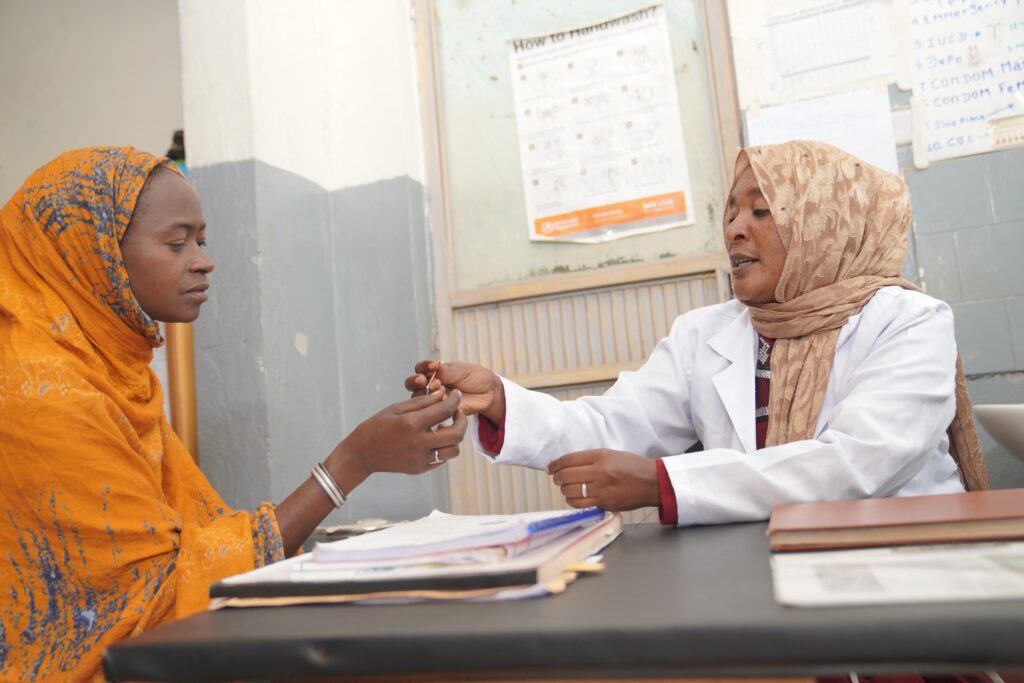
One of her clients is Elema Galima, a 37-year-old mother of four children, who came to remove her previous birth control method because she was suffering from side effects of the implant. She was worried that the discomfort of having an IUD inserted would be similar to other methods she had tried in the past, but after the proper counseling she received from Dahabo, she is now using an IUD and says she’s more at ease, with no bleeding, and has become an advocate to her neighbors to use IUD as an option for their own family planning.
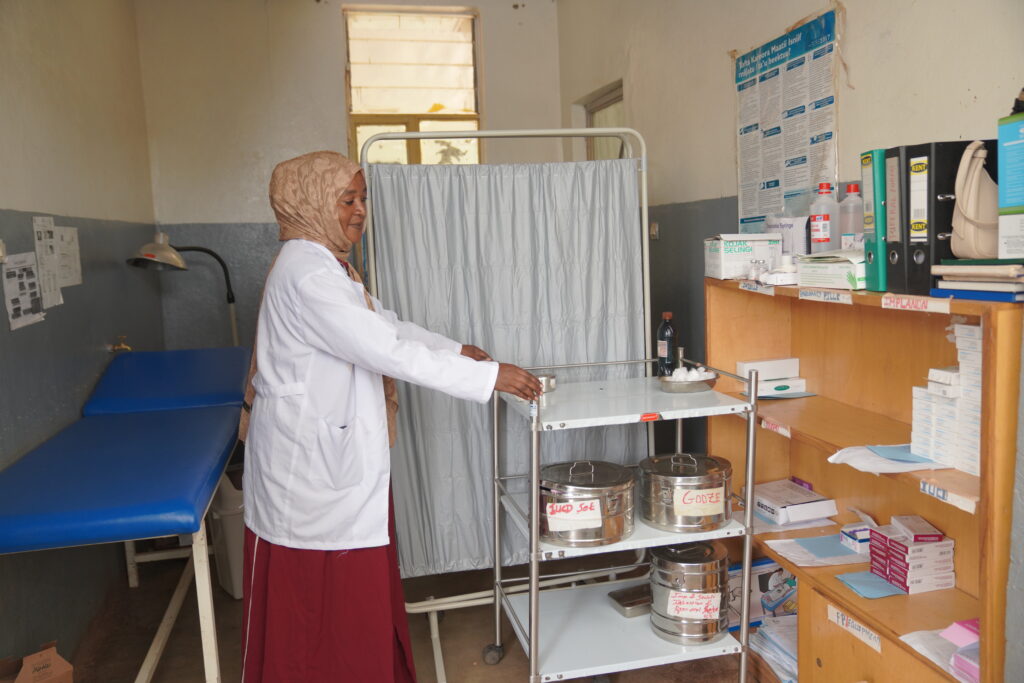
Dahabo is confident in her work and feels proud that she is contributing to changing one of the so-called “sensitive” issues in her community: the use of contraceptives. Reflecting on her experiences, she emphasizes the need to focus on both the values and skills of health workers, alongside efforts to raise awareness at the individual and community levels. This is particularly important when providing sexual and reproductive health services in communities where deep-rooted social stigma and taboos prevent girls and women from accessing vital services.
Learn more about REACH and how it is changing lives in Ethiopia.