
Rani and Pallavi: A Mother-Daughter Journey to Menstrual Dignity
By Mini Kurup & Dr. Priyanka Kochar, EngenderHealth India
For decades, women in Parshurampur village in Bihar, India, managed their periods with folded strips of old cloth. Open discussions about menstrual health were rare, even among close family members. This silence, fueled by myths and misinformation, left many women suffering quietly with discomfort, infections, and social isolation.
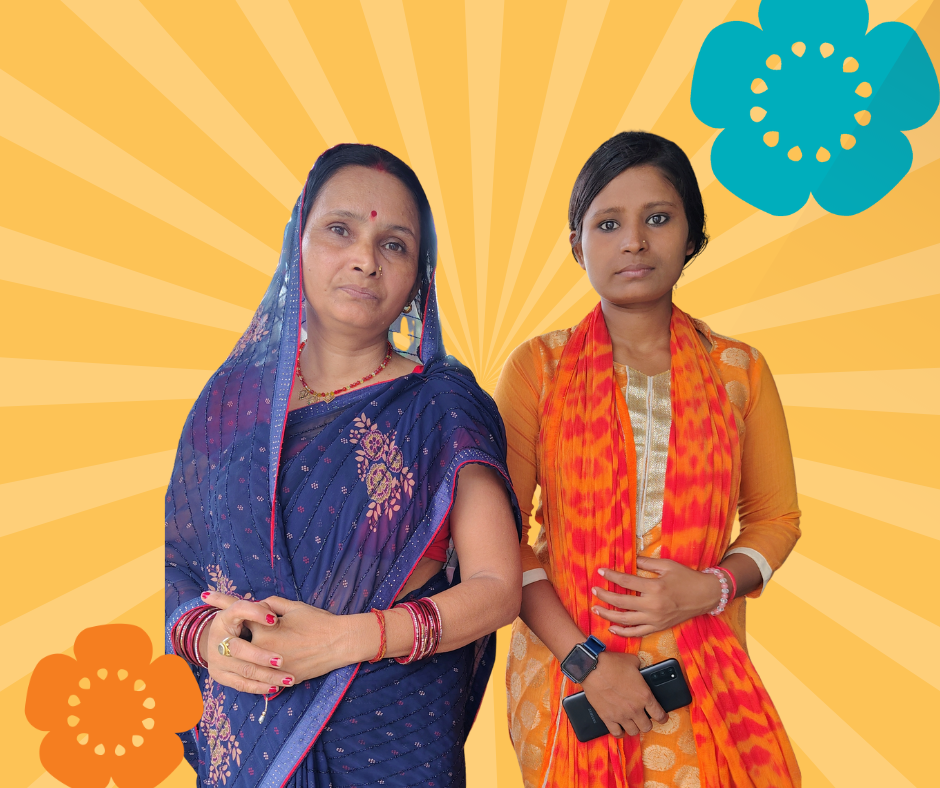
For Rani Devi, an Accredited Social Health Activist (ASHA) and trusted women’s health advocate, menstruation remained a difficult taboo to confront in her community.
“I’ve always tried to help women, but periods were something we never really talked about,” Rani shared honestly. “Even women suffering from infections wouldn’t open up, not even to me.”
Breaking the Cycle of Silence and Uncomfortable Traditions
Growing up, Rani used old cloths during her periods like most women in her village. Reusing cloth was common, but it could often lead to discomfort or cause infections if not properly cleaned and dried. After her first child, when her bleeding became heavy, she stopped reusing cloth. When her daughters started their periods, her family began buying sanitary pads. Still, openly discussing menstruation was rare.
“There’s a lot of shame still around periods,” Rani says. “Many women won’t even tell their husbands if they have problems or pains. They suffer in silence.”
Using cloth or pads was not without its challenges—possible rashes, worries about stains and leaks, and the dilemma of disposing of used materials were daily concerns for Rani, especially when traveling for work.
A New Possibility: The Menstrual Cup
Rani’s journey toward change started years ago when her daughter Pallavi became a peer educator through EngenderHealth’s programs. In August 2024, an EngenderHealth team with the Ben Kharl Project visited Parshurampur and introduced the community to menstrual cups: a reusable, eco-friendly, and affordable alternative many had never heard of.
“At first, we were confused,” Rani recalled. “It looked like plastic but felt soft. ‘How can this go inside our bodies?’ we wondered.”
Trainers patiently answered every question, explaining the medical-grade silicone cup can last up to ten years and is safe to use. Feeling encouraged and supported, Rani decided to try it herself.
“The first two days were uncomfortable, but then it was freedom. I could work, travel, and move without fear of leaks or discomfort,” Rani remembers.
A Daughter Joins the Movement
Rani’s experience inspired her 21-year-old daughter Pallavi, who was already familiar with menstrual cups through her peer education training. After Rani confirmed it was safe for women her age, Pallavi started using one too.
“We don’t buy pads anymore. One cup—so many benefits,” Rani says with a smile.
For Rani and Pallavi, the menstrual cup represents more than convenience: it symbolizes dignity.
“I can manage my periods quietly, without carrying anything bulky or worrying about stains,” Rani says. “It’s better for my health and the environment.”
She fondly remembers a moment in the field during her period when she felt no discomfort like she had in the past. In that moment, she felt proud and free.
A Vision for Menstrual Equity
Despite progress, many women in Parshurampur still rely on old cloth and there are many persistent myths about menstruation.
“Women reuse cloths without understanding the risk of infections,” Rani explained. “And men’s lack of awareness adds to the stigma—some even discourage their wives from using different products out of fear.”
As an advocate for menstrual cups, Rani believes access is just as important as awareness.
“We need to make these cups easier to find,” she says. “Women deserve comfort and dignity.”
For Rani and her daughter Pallavi, change began with information, but it continues through community support and access to affordable, reusable products.
“Periods are not a curse, they’re a gift. Women should manage them without shame or fear. That’s why we must talk openly, ask questions, and support each other.”
Their story reminds us that menstrual health is not merely an individual issue, but an important part of gender equality, health, and dignity. Supporting communities like Parshurampur with education, access, and open dialogue is essential to ensuring every woman can manage their body with freedom and choice.