
Muskan’s Journey: How a Daughter Inspired Her Mother’s Menstrual Dignity
By Mini Kurup & Manishankar Kumar, EngenderHealth India
In the quiet village of Bhatauliya, nestled in Bihar India’s Sitamarhi district, a powerful change is underway, led not by a government official or a celebrity, but by a 21-year-old student named Muskan Priya.
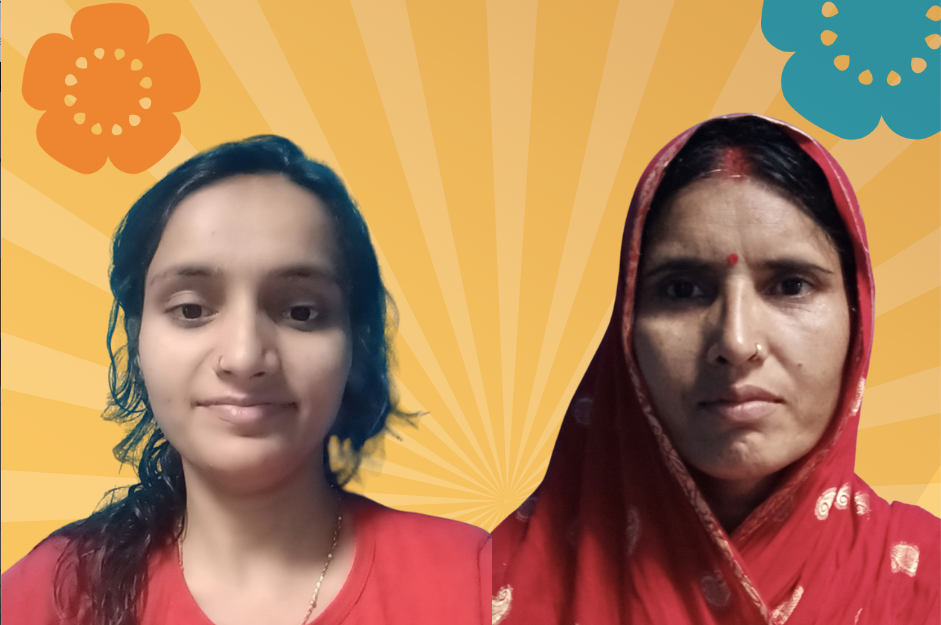
What began as a peer education assignment has become a personal revolution in dignity, health, and women’s freedom, one that is now transforming not just Muskan’s life, but her mother’s, her neighbors’, and her entire community.
Breaking the Silence: A Young Leader Emerges
Muskan’s journey began in 2019, when she was selected as a Peer Educator through the Rashtriya Kishor Swasthya Karyakram (RKSK) program, supported by EngenderHealth. Alongside a small cohort of adolescents and local health workers, Muskan learned about menstruation, reproductive health, and gender equity—topics rarely discussed aloud in her village.
“At first, I was shy,” Muskan admits. “Talking about periods was never something we did, not even with friends. But I realized that staying silent meant staying stuck.”
Through interactive storytelling, games, and trusted mentorship, Muskan gained more than knowledge: she found her voice and she began to use it.
She started forming discussion groups with her peers, supporting new mothers with newborn care, and even training the next generation of peer educators. This experience made her feel stronger and more confident in training others.
Introducing a New Choice: The Menstrual Cup
In 2024, EngenderHealth launched the Ben Kharl Project, focused on expanding access to menstrual cups: an affordable, reusable product that was unknown in Bhatauliya. Muskan was selected as a local leader to help introduce the cup to her village.
Curious but cautious, she enrolled in an online training, this time with her mother by her side.
At first, I was confused,” Muskan remembered. “I remember thinking, ‘How can this big cup fit inside?’ But we followed the guide, took our time, and gave it a try.”
The impact was immediate.
“The first day was uncomfortable,” she recalls. “But after that—I couldn’t believe how free I felt. I didn’t have to worry about leaks, stains, or where I had to change my pad. Even riding my scooter, I wasn’t afraid of accidents. I felt powerful.”
It wasn’t long before her mother decided to try it too. The next month, they became the first mother-daughter pair in Bhatauliya to use menstrual cups.
Shifting Culture, One Conversation at a Time
What happened next was unexpected and extraordinary.
When the EngenderHealth team later visited Bhatauliya for an in-person workshop, Muskan and her mother proudly told their story to a group of 30 women. They talked about the cup’s hygiene, comfort, the environmental benefits, and the financial relief of not buying pads each month.
Months later, dozens of women in Bhatauliya use menstrual cups, many of them inspired by Muskan’s honesty, leadership, and lived experience.
“This change isn’t just about saving money or reducing waste,” Muskan says. “It’s about respect, comfort, and confidence. My mother used to itch during her periods, now that’s gone. And we don’t worry about where to throw away pads or how many pads we can afford.”
Why Menstrual Health Is About More Than Hygiene
Muskan’s story is a reminder that menstrual health is not just about access to products—it’s about freedom.
“For the first time, I felt like my period didn’t control me. That’s what the menstrual cup gave me—freedom to move, to speak, and to live without shame.”
But she knows the work isn’t finished. Many women in her village still use cloth out of necessity, stigma, or lack of information. For Muskan, real dignity will only come when everyone—women, girls, boys, and men—becomes part of the conversation.
“False beliefs grow in silence,” she says. “We need education and access for everyone about reproductive health and menstruation.”
A Call for Investment in Menstrual Equity
Muskan believes that menstrual dignity must be supported by public systems. She wants to see government-backed distribution of menstrual cups, widespread education in schools, and more safe spaces for girls to ask questions without fear.
“Periods shouldn’t be a problem,” she says. “They should be normal. And every girl and woman should have the tools to manage them with dignity.”
Muskan’s journey is a powerful reminder that real change begins at home when we are brave enough to speak.
Thanks to her courage, Bhatauliya is changing. One conversation at a time. One menstrual cup at a time. One woman at a time.
“Today, we are not just handling our periods better,” Muskan says. “We are changing how people think about women’s health and women’s bodies.”